Visual-spatial ability is a broad term that emphasizes processes such as image generation storage retrieval and transformation and includes a collection of skills in the areas of spatial relations visualization visual memory closure speed and spatial scanning Mather Wendling 2005. Keep in mind that most tasks that we think of as primarily visual-spatial require other visual processing skills too.
 Definition The Visual Spatial Learner
Visual Spatial perception provides us with information about our environment.
Visual spatial definition. Visual spatial skills help individuals find their orientation in space through taking in information from the world around them and organizing that visual information to create an understanding of meaningful patterns. This is an important part of spatial awareness in handwriting and many other movement-based activities. It is the first language of the brain.
Visual Spatial Relations is an important visual perceptual skill that is important for many functional tasks. They have a keen sense of direction and often enjoy maps. The ability to determine spatial awareness and relationships is important in everyday tasks at school and at home.
Includes your ability to visualize remember images and details and an awareness of your surroundings Each intelligence is independent of the others. That includes your own body parts. Visual spatial processing is an individuals ability to process visual stimuli to comprehend spatial relationships between objects and to visualize different scenarios or images.
It is the ability to distinguish differences among similar objects or forms. The capacity to understand and idealize visual symbolizations and spatial associations in learning and in the carrying out of jobs like finding ones way. It also involves being able tell how far objects are from you and from each other.
You also have a good spatial sense which gives you a good sense of direction. Visual-spatial processing is the ability to tell where objects are in space. Visual-spatial intelligence refers to the ability to visualize and represent the outer world in your mind and replicate those images in the exact way that they feature.
How to use visuospatial in a sentence. An important part of visual spatial relations includes laterality and directionality. Visual spatial relations allows the organization of the body in relation to objects or spatial awareness.
For instance using a map to guide you through an unfamiliar city merging into high-speed traffic and orienting yourself in your environment as when you are learning your way around a new school building are all activities that involve spatial. The visual-spatial learning style is one of eight types of learning styles defined in Howard Gardners Theory of Multiple Intelligences. People with VisualSpatial intelligence are very aware of their surroundings and are good at remembering images.
Also referred to as visual-spatial and visuo-spatial visuospatial abilities consist of the ability to understand what we see around us and interpret spatial relationships. The definition of visual-spatial relations is the ability to visually perceive two or more objects in relation to each other and to yourself. We live in a colorful three-dimensional world.
They have a sharp sense of space distance and measurement. Therefore individuals must analyze shapes and colors of everything they see be able to identify an objects position relative to other objects below above on the right on the left or estimate the distance between themselves and an object. In other words this includes both the images we see visual as well as our perception of the size and location of our surroundings spatial.
Visual-Spatial Giftedness John Munro Dual coding theory notes that humans code information in two ways imagery or episodic encoding converts information to imagery and permits the ability to visualize linguistic encoding converts information to verbal semantic knowledge. Visuospatial definition is - of relating to or being thought processes that involve visual and spatial awareness. These lead to two ways of organizing knowledge.
Why are visual-spatial relationships important. If you use the visual style you prefer using images pictures colors and maps to organize information and communicate with others. The way a child perceives space and their position or orientation within that space can affect their gross motor skills and classroom performance.
It is the ability to place yourself in a space and visualize everything as it is even in the absence of the stimuli. You can easily visualize objects plans and outcomes in your minds eye. People with Visual intelligence learn well through visual aids such as graphs diagrams pictures and colorful.
Visual-spatial learning style or visual-spatial intelligence refers to a persons ability to perceive analyze and understand visual information in the world around them. What is Spatial Intelligence Spatial intelligence also known as visual spatial intelligence or spatial reasoning is the capacity to imagine or visualize in ones mind the positions of objects their shapes their spatial relations to one another and the movement they make to form new spatial relations. The Visual Spatial Learning Style.
Psychology Definition of VISUAL-SPATIAL ABILITY. Visual-Spatial Thinking Defined Visual-spatial thinking is the ability to perceive the visual information in the environment to represent it internally to integrate it with other senses and experiences to derive meaning and understanding and to perform manipulations and transformations on those perceptions. Visual-spatial skills are of great importance for success in solving many tasks in everyday life.
It is realistic in the sense that the solution is sought always in reference to the reality of the situation. Mental ability to imagine the objects in space and move them to different apparent locations.
 What Is Spatial Intelligence What Does Spatial Intelligence Mean Spatial Intelligence Meaning Youtube
Spatial intelligence was focused in Thurstones theory.
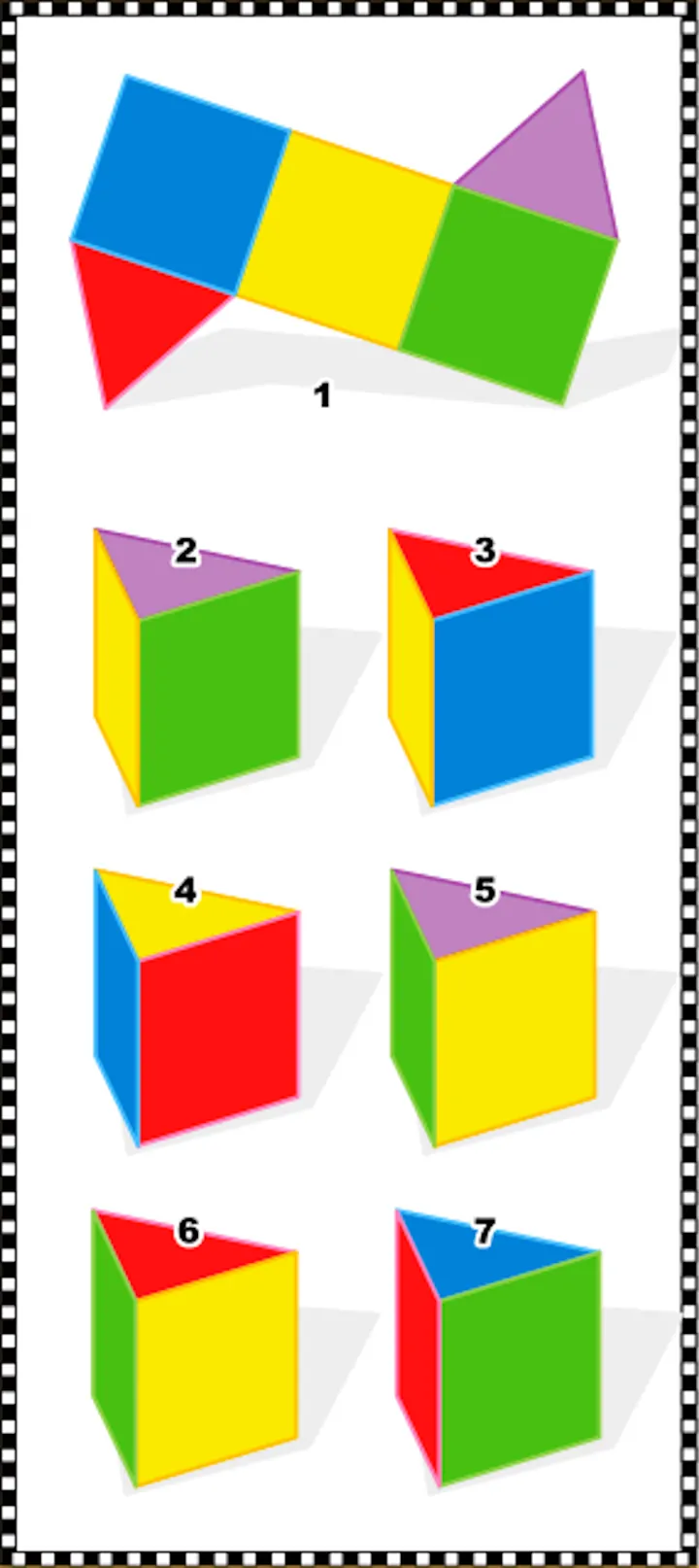
Spatial reasoning definition psychology. Spatial reasoning Techniques in artificial intelligence that attempt to emulate human reasoning during navigation and other spatial tasks. Spatial reasoning is a type of reasoning skill. Spatial-temporal reasoning is the ability to visualize spatial patterns and mentally manipulate them over a time-ordered sequence of spatial transformations.
What is spatial ability. The spatial reasoning of the blind person allows them to translate tactile sensations into mental calculations of length and visualizations of form. Spatial ability is not a.
It is one of the best forms of controlled thinking consciously towards the solution of a problem. We can solve many problems in our day-dreams dreams and imaginations but they are unrealistic solutions. Spatial ability can be seen as a form of intelligence where a person demonstrates the capacity to mentally generate transform and rotate a visual image and thus understand and recall spatial.
51 Spatial Abilities Definition As mentioned earlier spatial abilities embody the ability to produce transform and interpret mental images Poltrock and Brown 1984. Spatial-temporal reasoning is the ability to visualize spatial patterns and mentally manipulate them over a time-ordered sequence of spatial transformations. Spatial intelligence is also a primary mental ability in Thurstones theory of primary abilities.
Spatial reasoning is a critical skill that develops significantly in early childhood. Heres how parents and caregivers can recognize the spatial talk they are already using--and do more. Someone with strong spatial reasoning skills is good at navigating calculating distance working with geometric figures designing structures and comparing data.
Spatial ability or visuo-spatial ability is the capacity to understand reason and remember the spatial relations among objects or space. Its acquisition storage and retrieval manipulation and use by humans nonhuman animals and intelligent machines. Those with a gift for this kind of reasoning can often visualize how things fit together step-by-step and how they can be manipulated into different patterns.
Spatial intelligence is one of researcher Howard Gardners nine multiple intelligencesThe word spatial comes from the Latin spatium meaning occupying space A teacher may logically conclude that this intelligence involves how well a student may process information that is presented visually in one or more dimensions. Spatial thinking or reasoning involves the location and movement of objects and ourselves either mentally or physically in space. Spatial-temporal reasoning is the cognitive ability to picture a spatial pattern and understand how items or pieces can fit into that space.
Ability to visualize and manipulate patters and forms in space. Current research involves enhanced forms of logic and qualitative reasoning. Visual-spatial abilities are used for everyday use from navigation understanding or fixing equipment understanding or estimating distance and measurement and performing on a job.
Cognition is about knowledge. At the broadest level folk physics is composed of abilities and biases that support movement in space eg navigation the mental representation of images and generation of cognitive maps and. Spatialtemporal reasoning in psychology.
Ability to grasp perceptual details quickly and accurately and to determine similarities and differences between stimuli. This ability is important for generating and conceptualizing solutions to multi-step problems that arise in areas such as architecture engineering science mathematics art games and. Spatial ability is the capacity to understand and remember the spatial relations among objects.
Lohman 1993 greatly highlighted the pivotal role of spatial abilities and particularly MI in all models of human abilities. Ability to recall information such as lists or words mathematical formulas and definitions. Spatial cognition concerns the study of knowledge and beliefs about spatial properties of objects and events in the world.
It is not a single ability or process but actually refers to a considerable number of. What Is Spatial Reasoning In Psychology. Spatial intelligence is one of the nine intelligences on Howard Gardners Theory of Multiple Intelligences each of which is composed of a number of separate sub capacities.
This ability can be viewed as a unique type of intelligence distinguishable from other forms of intelligence such as verbal ability reasoning ability and memory skills. It is one of Gardners multiple intelligence theories. Its the ability to think about the spatial relationships between three-dimensional objects.
They are fundamentally interested in modeling their world whether in the block corner or the housekeeping area and spatial relationships are a large part of what they grapple with there. The way a child perceives space and their position or orientation within that space can affect their gross motor skills and classroom performance.
 Typology Of Spatial Relationships And Interdependencies For A Download Scientific Diagram
Search for more papers by this author.

Understanding spatial relationships. Understanding spatial relationships are one of the essential abilities for both humans and robots to interact with the physical world. Parents and preschool educators should begin teaching spatial concepts to children at a very early age. This is an important part of spatial awareness in handwriting and many other movement-based activities.
This therapy material will allow the clinician to determine the patients accuracy with the visual-spatial relationships with these questions to locate target numbers among various shapes. Visual Spatial Relations Visual Spatial perception provides us with information about our environment. For example a ball may be behind the chair or under the table or in the box.
A spatial understanding is needed for understanding sentence structure and grammar. Understanding Spatial Relationships When there is damage to the right hemisphere understanding spatial relationships can become difficult. Understanding Spatial Relationships in Admission Competition.
In infancy children use their senses to observe and receive information about objects and people in their environment. At age two children are already absorbing learning and rapidly developing their vocabularies. An important part of visual spatial relations includes laterality and directionality.
Children between the ages of 3 and 6 are more than ready to develop their skills at expressing directions from different locations and understanding relative positions. Spatial relationships refer to childrens understanding of how objects and people move in relation to each other. This paper will discuss the way that institutional researchers can use exploratory spatial data analysis ESDA to help enrollment management professionals and senior campus.
The understanding of spatial relationships in ultrasonography US is crucial for the appropriate creation and interpretation of US images. The ability to reason about spatial relationsis likely to depend on the construction of mental models. Visual spatial relations allows the organization of the body in relation to objects or spatial awareness.
Learning to understand spatial relationships helps children talk about where things are located. The cup is on the right of the spoon. In summary simulation-based approaches to CBT can support the optimal use of imaging procedures especially.
Teddy under bed and describe and discuss the world around them If you put the triangles together they make a square. Spatial relationships between objects are important compo- sitions of the representation for a physical environment and it is also a vital description of a scene for human beings daily lives. Spatial information in radiographs Nilsson et al 18 showed that simulation-based approaches can improve the understanding of spatial relationships between anatomic structures especially for indi-viduals with low visual-spatial ability.
Understanding the spatial relationships that link social communities to their ecosystems and biophysical landscapes Aim of the resource The objective of the resource is to understand socio-spatial relationships in order to integrate and strengthen participatory and more inclusive policy formulation. Byrne and Johnson-Laird 1989investigated the following sort of problems which describe the layout of objects on a table top. Learning about spatial relationships boosts understanding of numbers UChicago scholars have shown that puzzle play is connected to improved spatial understanding such as geometry.
Spatial awareness and spatial relations allow children to locate objects and navigate successfully in their environments. Using the Overlay toolset in ArcGIS Pro GIS professionals can easily perform analysis to discover and quantify the spatial relationships between and among features. The dog may be on the blanket outside of the house or in the doghouse.
Position in Space is the ability to perceive an objects position in space relative to oneself and the direction in which it is turned for example. The Geometry on Geometry check creates result geometries if features from either the same or two different feature classes share a spatial relationship. Spatial awareness can affect social functions like maintenance of personal space.
GIS professionals can use various tools to help them answer questions about how places are related. They can see and follow people and objects with their eyes. Understanding of spatial concepts and relationships usually predicts later success in math reading and following directions.
Visual Spatial Relations is an important visual perceptual skill that is important for many functional tasks. Up down in front behind between left right. If this check uses the Intersects or Touches spatial relationship result geometries will be points.
It is the ability to distinguish differences among similar objects or forms. A new study is the first to connect robust spatial learning with better comprehension of other aspects of mathematics such as arithmetic. This web course will introduce you to spatial relationships and the tools available.
Using spatial language enables children to express their needs and concerns Oh no Mama. To obtain good reproducible results at conventional two-dimensional 2D US the operator needs to understand how three-dimensional 3D objects appear on 2D images relative to the position and orientation of the US probe. Spatial Relations involves the ability to understand directions reversals and identify left and right on ones own body.
This type of test is designed to assess engineering and technical candidates and is also being widely used for military entrance papers. It is typically measured with simple cognitive tests and is predictive of user performance with some kinds of user interfaces.
 Headstart For Life Art And Visual Spatial Intelligence
People with existential intelligence are abstract philosophical thinkers.

What is spatial intelligence. Spatial awareness is made up of two processes the exteroceptives which create representations about our space through feelings and interoceptive processes which create representations about our body like its position or orientation. This particular intelligence that involves how sensitive an individual is to nature and the world. Also called the ninth intelligence or cosmic smarts existential intelligence is the intelligence of big thinking.
Spatial clustering can be used to create sales territories that make more sense for sales teams. Through spatial analysis you can interact with a GIS to answer questions support decisions and reveal patterns. For example with LI.
Location intelligence embraces new methods of analyzing location data for business process optimization and prediction while traditional GIS analysis methods focus on reporting historic geographic information. People with this type of intelligence enjoy reading and writing. Confusion and dissension is caused by Title 10 US.
131 What is Spatial Analysis. Geospatial Intelligence can be derived entirely independent of any satellite or aerial imagery and can be clearly differentiated from IMINT imagery intelligence. Kinaesthetic and visual-spatial intelligence is the learning to sit stage.
Once the child can sit the hands become free and. Code 467s separation of imagery or satellite information from geospatial information as imagery is generally. Spatial analysis consists of identification of critical environmental limits primarily climate soil and water resources of specific crops or agricultural systems applications of climate change scenarios and calculation of resulting spatial shifts in crop or agricultural regions.
Applications can be found everywhere from finding optimal locations in retail site selection and solving traffic. The spatial intelligence test is a non-verbal aptitude test which aims at assessing your capability to interpret complex shapes and plans. Over 90 of companies believe location intelligence is crucial to their success.
They have the ability to use meta-cognition to explore the unknown. This agroclimatic method provides an approximation of possible changes in crop areas from a biological perspective but does not address potential changes in either yield or production. He first proposed his theory of multiple intelligences in the 1980s.
Spatial reasoning tests also known as spatial awarenessability are used to asess a candidates capacity to manipulate 2D and 3D objects spot patterns between shapes and to visualise movements and change in those shapes. Spatial intelligence is a skill that is not widely taught even though its attributed to successful minds in creative fields and STEM. Spatial visualization ability or visual-spatial ability is the ability to mentally manipulate 2-dimensional and 3-dimensional figures.
Howard Gardner is an American developmental psychologist. Spatial thinking as applied in Geospatial Intelligence can synthesize any intelligence or other data that can be conceptualized in a geographic spatial context. And spatial intelligence is on the list.
They use geospatial data and spatial analysis to deliver location intelligence which empowers understanding insight decision-making and prediction. This could include identifying which answer option is a rotation of a given 2D image. Spatial perception is the ability to be aware of your relationships with the environment around you exteroceptive processes and with yourself interoceptive processes.
Together with sitting develops the eye-hand coordination. According to Gardner there. According to Gardner there are.
People who excel in this intelligence typically are interested in growing plants taking care of animals or studying animals or plants. Luckily for us spatial intelligence is not something youre inherently gifted at or just born with its something that can be trained and improved through practice. They thrive on intellectual debate and arent afraid to challenge the norm.
Howard Gardner is an American developmental psychologist. Spatial analysis is in many ways the crux of a GIS because it includes all of the transformations manipulations and methods that can be applied to geographic data to turn them into useful information. When a baby is too often in a Maxi-cosy the muscles do not get enough practise and do not get stronger which delays the child in being able to sit by himself.
Spatial intelligence typically consists of two main abilities namely spatial visualization ability which is your ability to imagine or visualize spatial images in your mind and spatial reasoning the ability to mentally manipulate and reason with these images. In his theory of multiple intelligences Gardner identified linguistic intelligence as the intelligence of words. Linguistic intelligence also known as verbal intelligence is one of Gardners nine types of intelligence.
He first proposed his theory of multiple intelligences in the 1980s.
Training consists of solving exercises based on the sketched drawing of three-dimensional volumes. Discov-ering how to increase one s level of spatial functioning is therefore an important goal.
 Game Features In Homeworld Bound Our Spatial Skill Training Game In Download Scientific Diagram
It is the ability to perform visualization and spatial reasoning in the head.
Spatial skills training. So if you start a program of spatial skills training dont be discouraged if kids dont show improvements right away. To determine whether and to what extent training and experience can improve these skills we meta-analyzed 217 research studies investigating the magnitude moderators durability and generalizability of training on spatial skills. Spatial abilities have been shown to be important for achievement in STEM subjects science.
Reported experiments provide tantalising though not convincing evidence that training a programming students spatial skills may accelerate the development of their programming skills. It has benefits to other areas of ability like maths. In the most recent meta-analysis of spatial skills training studies conducted by Uttal et al.
The hands-on activities included. INTRODUCTION Strong spatial skills are a predictor of success in many engineering disciplines 38 29. It lasts beyond the training session and transferable ie.
Improving spatial skills is therefore of both theoretical and practical importance. Objects can be manipulated through mental movement rotation or transformation. This means that Spatial Training usually involves practicing paper and pencil spatial tasks completing spatial games on a computer or doing spatial activities like building structures with blocks.
To improve spatial capacity levels and to provide knowledge in graphic representation systems necessary in professionals related to engineering and architecture. Mathematics natural sciences engineering economic forecasting meteorology and architecture all involve the use of spatial skills. Spatial ability is also important for success in many fields of study.
However of the 217 studies only 53 studies focus on children younger than 13 years with very few focusing on infants toddlers and preschoolers. Spatial Skills Training in Introductory Computing Stephen Cooper Stanford University 353 Serra Mall Stanford CA 94305 16507239798 Karen Wang Maya Israni Stanford University 353 Serra Mall Stanford CA 94305 Sheryl Sorby The Ohio State University 2070 Neil Avenue Columbus OH 43210 coopersstanfordedu ABSTRACT kywang mayaistanfordedu sorby1osuedu This paper explores the question as. Its what we do when we visualize shapes in our minds eye Its the mental feat that architects and engineers perform when they design buildings.
Spatial abilities have been linked to higher-level thinking reasoning and the creative process 1 5 34 38. But it is not clear exactly why and how spatial abilities lead to success. Spatial reasoning involves understanding and remembering the relative locations of objects in the mind.
2013 217 intervention studies were included for analysis revealing that the average effect size for spatial skills training relative to control was Hedgess g 047 SE 004. A review has concluded that spatial training produces significant improvement particularly for poorer performers and that such training could significantly increase STEM achievement. Spatial intelligence or visuo-spatial ability has been defined the ability to generate retain retrieve and transform well-structured visual images Lohman 1996.
It may take 6 sessions or more before you notice a difference. Perception attention memory motor skills language executive functions and visual-spatial processing. Visual spatial processing is an individuals ability to process visual stimuli to comprehend spatial relationships between objects and to visualize different scenarios or images.
Spatial skills can be improved through training. Fortunately performance of spatial tasks can be improved through practice and train-. They can change and develop.
In a popular article for American Education Nora Newcombe 2010 stresses that students with poor spatial skills are often slow to improve in the beginning. For instance an astronomer must visualize the structure of a solar system and the motions of the objects in it. Second a meta-analysis of research on spatial ability concluded that spatial skills are malleable ie.
The online training included exercises like mentally rotating geometric figures or imagining the shapes that result when a plane slices through different objects. Spatial skills play a key role in many types of reasoning and communication and are important in domains such as mathematics natural sciences and engineering. The study used spatial ability tests water level card rotation and paper folding math anxiety scale and a training program that included training activities for mental rotation and spatial.
Spatial skills are also associated with academic preparation and training factors such as standardized test scores selection of a STEM versus non-STEM major and number of STEM courses taken. And that training is optimally beneficial in children Uttal et al 2013. That spatial training is effective durable ie.
In addition the training we offer you has a dual objective. Entrenamiento de mejora de habilidades espaciales con tecnología de Realidad Aumentada en estudiantes de ingenieríaSpatial skills development through augmen. We also found correlations between motivation for learning and spatial skills suggesting that training and retention of spatial skills throughout life are guided by motivation.