Co-sleeping means that your child sleeps near the parent but not in the same bed. The safest place for your baby to sleep in their first six months is in a separate Moses basket or cot in the same room as you.

The American Academy of Pediatrics AAP suggests room-sharingco-sleeping as opposed to bed sharing.
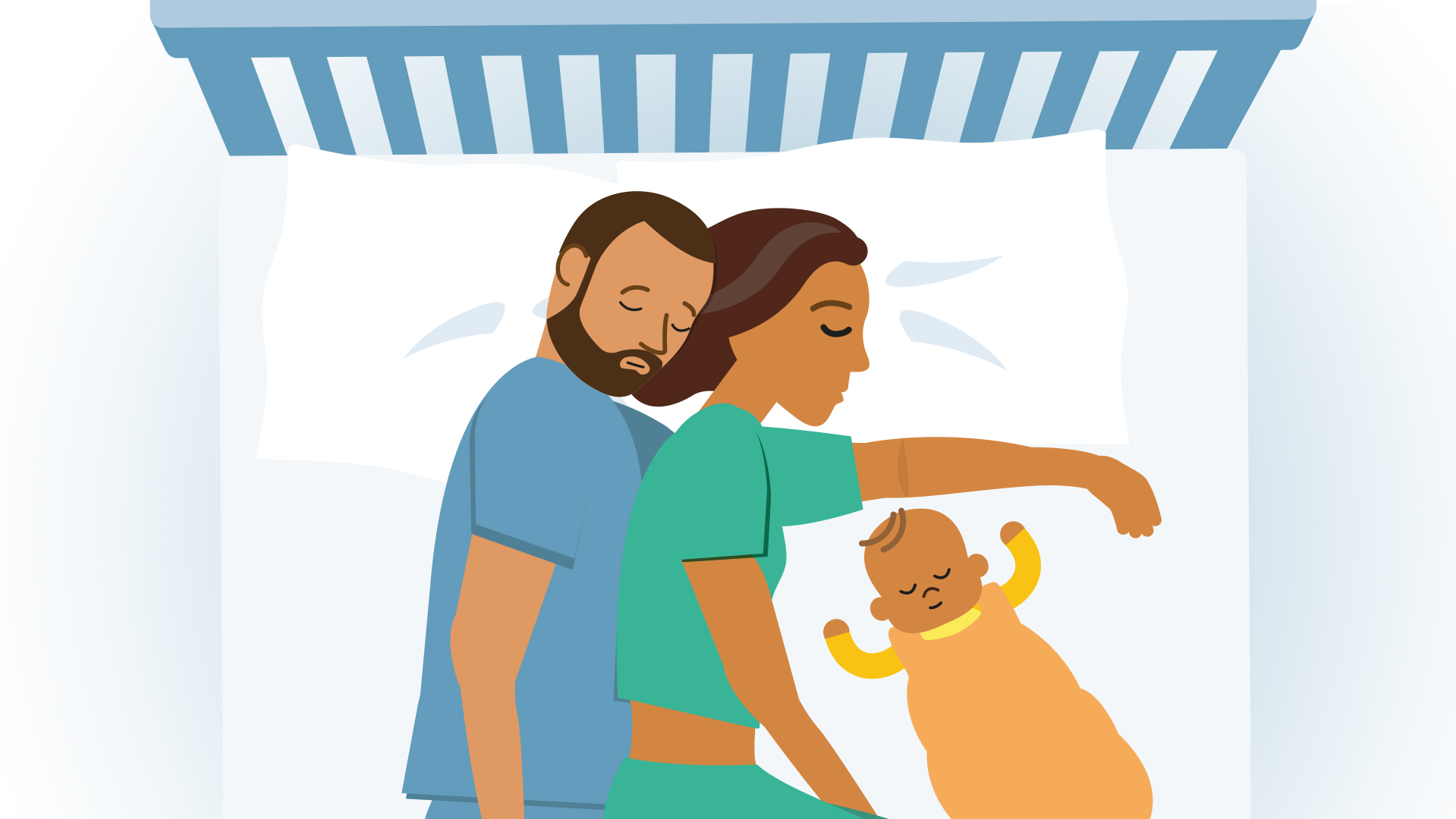
Difference between co sleeping and bed sharing. The terms bed sharing and co-sleeping are often used interchangeably but they have different meanings. Heres what I think of when I say co-sleeping. Bed-sharing a practice in which babies and young children sleep in the same bed with one or both parents is a subset of co-sleeping.
Room-sharing and bed-sharing are types of co-sleeping. This is the main difference. Co sleeping means the same room while bed sharing means the same bed.
Parents sleep in the same bed with the child. Strangulation an infants body may pass through part of a bed frame that is too small for the babys head trapping her. Child Abuse and Gynecologic and Neonatal Nursing 2 0 0 8 3 7 3 2 7 4 -8 1.
It may be in the same bed or just in the same room. Co-sleeping is good safe recommended but bed-sharing is bad dangerous verboten. Securely attach a crib to one side of the parents bed next to the mother.
The terms co-sleeping bed-sharing and room-sharing are often used interchangeably by parents when talking about the best sleep environment for their family. But at some point in the first few months after having a baby around half of all parents in the UK co-sleep or bed share with their newborn. Bed-sharing means sleeping in the same bed as your baby or sharing the same sleeping surface.
Co-sleeping is sleeping with baby in the room with you. Some parents also choose to sleep with their baby in other places. It is a vague term that is very confusing for parents.
This means you can still be close to your baby without actual bed-sharing which carries a risk of suffocation and over heating. Co-sleeping is a term used by many as an umbrella for anything from bed sharing to room sharing and anything in between. Baby has theyre own area instead of sleeping in the bed with you.
This means that their baby shares the same bed with an adult for most of the night and not just to be comforted or fed. MNOpeas answer first great minds think alike. Bedsharing means the child shares the parents bed.
Some ways of co-sleeping that different families use are. Co-sleeping essentially means sleeping in close proximity to your child. Blair and Ball 2004.
This is when a parent and child sleep in close social or physical contact of each other meaning that each can tell that the other is nearby. Bedside sleepers enable you to lean over and easily pick up your baby when feeding at night. A sleep arrangement in which an infant sleeps in the same room as parents or other adults but on a separate sleep surface such as a crib bassinet or play yard.
Bedside cribs allow you to have your baby sleeping right next to you at night but in the safety of their own crib. So whats the difference between co-sleeping and bed-sharing. Co-sleeping means sleeping in close proximity to your baby sometimes in the same bed and sometimes nearby in the same room room-sharing.
And while there are slight similarities between these three terms its important for you to understand the considerable differences especially as they relate to safety before making the best decision for your family. Sometimes theyre used interchangeably but to me theyre different. Many people use the terms bed-sharing and co-sleeping to describe the same thing but there are differences.
Bed sharing is what it sounds like. Co-bedding refers to infants typically twins or higher-order multiples sharing the same bed. Co-sleeping is when a parent is within arms reach of the infant but doesnt necessarily mean they share the same bed according to the website Very Well.
Co-sleeping with your baby Some parents choose to bed share with their babies. Bed sharing is the practice of falling asleep on the same surface as. E v id e n c e fo r c ry in g a s a trig g e r to s h a k in g.
Simply put a crib or bassinet in your room instead. There are conflicting views on bed-sharing safety and health compared to using a separate infant bed. This confusion can be cleared up by using two distinct terms bed sharing and room sharing.
12-15 visits to the breast is well within a normal range Entwistle 2013. Its normal for a young baby to be on the breast many times a day and night.
 Baby Night Feedings By Age A Reference Chart By The Baby Sleep Site
Thats when Ill go to 3 hour or 35 hour feedings at whatever time seems to suit.

Time between feeds newborn. If your baby wont eat what you offer the first time try again in a few days. That means counting from the beginning of one feeding to the beginning of the next. By only feeding baby every 25 to 3 hours and then at those feeds giving baby full feeds.
Monitor your newborns weight gain. Newborn Baby Awake Time Speaking of daynight confusion one way to help your newborn sort out days and nights is to keep your baby awake for a short time between daytime feedings. By the time theyre 2 weeks old they should drink about 2 or 3 ounces per feeding.
Contact your newborns doctor if you are concerned about lack of weight gain. Wait three to five days if possible before offering another new food. Newborns will naturally only need to feed every 25 to 3 hours if theyre taking full feeds each time.
If he isnt gaining weight properly he may need more formula or breast milk. You can try patting stroking undressing or changing the diaper to help wake your baby to feed. Watch your baby for feeding cues such as increased alertness or activity mouthing rooting and suckling.
How Do I Count the Time Between Feedings. Your baby will feed 7 to 9 times per 24 hours. For the first few weeks until your milk supply is well-established youll want to feed baby a minimum of every two to three hours.
At this age your baby should drink about 4 to 5 ounces per feeding. Often these cluster feeding periods are followed by a longer stretch of sleep. Over the first few weeks and months the time between feedings will get longerabout every 3 to 4 hours for most infant formula-fed babies.
Offer a newborn 1 to 2 oz. Fussing and crying are later cues. During this period your newborns sleep patterns will look nothing like yours.
Your baby will sleep in short bursts anywhere from 30 or 45 minutes to 3 or possibly 4 hours and then eat between periods of sleep. Newborn babies want to feed on demand usually 8 to 12 times in a 24 hour period for the first two to four weeks. Of formula at a time.
For example if baby ate at 1 pm. Some doctors recommend that you introduce new foods one at a time. Newborns should not go more than about 4 hours without feeding even overnight.
Your newborn may need to eat in just one or two hours however. While breastfeeding be careful of well-meaning family and friends who encourage you to breastfeed less often. Some feeding sessions may be long and other feedings.
Your baby will feed around 6 times a day. After the first week increase that amount to between 2 and 4 oz. The sooner you begin each feeding the less likely youll need to soothe a frantic baby.
Look for early signs of readiness to feed such as moving the hands to the mouth sucking on fists and fingers and lip smacking. Some babies may feed as often as every hour at times often called cluster feeding or may have a longer sleep interval of 4 to 5 hours. Newborns fed this often first weeks of life tend to show greater weight gain at 15 days De Carvalho et al 1983 and six weeks Casiday et al 2004 postpartum.
Thats when you need to get this swaddle so you can wean one arm at a time. If your baby or family has a history of allergies talk to your babys doctor about specific timing. Newborns also tend to have periods each day where they feed very frequently for a few hours cluster feeds.
If your baby has a habit of snacking they will not be the ones to stop it youll have to. And again at 3 pm thats two hours between feedingseven if she sucked for a full hour. The length of time between feeds can vary greatly from baby to baby.
Some might feed every 90 minutes whereas others might go 23 hours between feedings. Newborns are more likely to thrive when they are fed approximately 8-12 times every 24 hours. A baby is considered a newborn from birth until about 3 months of age.
By four or five months when the baby is sleeping 12 hours at night they are usually awake more during the day and able to cope with more stimulation and play. If you are formula feeding expect your baby to eat within three to four hours on average from the last feeding advises the American Academy of Pediatrics HealthyChildren website 3. As a general rule babies who are feeding well will feed for between five and 40 minutes at each feed UNICEF 2010.
Your baby will let you know when theyve had enough milk. This means you may need to wake your baby to feed. Feedings take place 6 to 8 times in 24 hours.
So much for the frequency of feedings. Most newborns need eight to 12 feedings a day about one feeding every two to three hours. The time between feeds is from the beginning of the last feed not the end.
1 to 3 months. Over the first few weeks and months the time between feedings will start to get longer on average about every 2 to 4 hours for most exclusively breastfed alert icon babies. However be sure that your newborns wake time is on the short side aim for 45 minutes or so in the first 6 weeks after birth.