As your child moves through these stages you can help teach empathy through something that is at the core of what your child does each and every day. And psychologists have revealed that we are primed for empathy by strong attachment relationships in the first two years of life.
 Six Steps For Developing Empathy In Social Situations
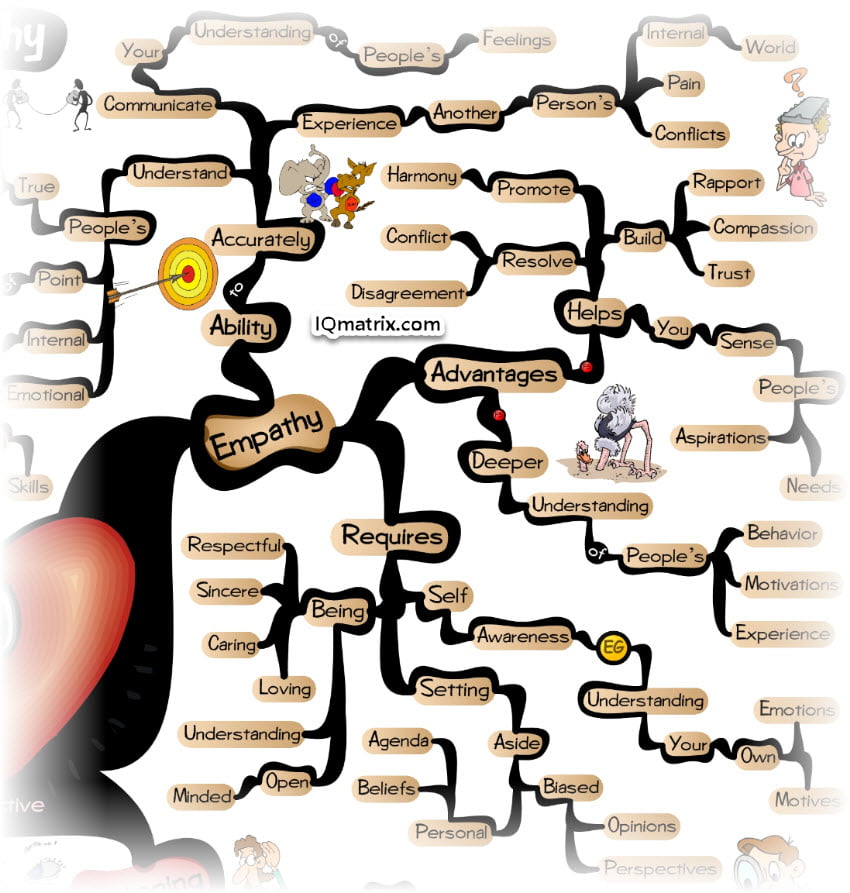
As a result you are better able to sense peoples aspirations and needs.

When does empathy fully develop. We can nurture its growth throughout our livesand we can use it as a radical force for social transformation. As five- and six-year-olds become more aware of their own emotions they begin to recognize them in others and their emotional vocabulary expands. Empathy helps us cooperate with others build friendships make moral decisions and intervene when we see others being bullied.
By the time a child is about 4 years old he begins to associate his emotions with the feelings of others. They are fully present with. While one child says he has a stomachache some 4-year-olds may come over and comfort him.
Compassionate empathy or Empathic Concern. Cognitive empathy begins rising from the age of 15. Empathy is the one weapon in the human repertoire that can rid us of the curse of xenophobia.
This would mean when you see someone else who is sad it makes you feel sad. Empathy is fragile though. Empathy allows people to build social connections with others.
While these are great tools for learning empathy it doesnt mean that a child is ever fully developed in this regard. It doesnt develop until this point because the child must first develop the ability to comprehend two fundamental concepts. Among our close animal relatives it is switched on by events within their community such as a youngster in distress but it is just as easily switched off with regards to outsiders or members of other species such as prey.
A rudimentary level of empathy develops in children universally by age 5. Emotional empathy refers to the ability to share another persons emotions. The age at which ToM generally develops is around 4-5 years when children start to solve the false-belief task.
As early as 18 to 72 hours following birth ne wborns who were exposed to the. Its a skill and like any skill empathy can be cultivated through intentional effort. Empathy development begins in early childhood and continues through adolescence and beyond.
Well for starters when you practice empathy you naturally develop a deeper understanding of other peoples behavior motivations and life experience. With this increased language facility the doors open to in-depth discussions about emotions that are the main avenue for developing empathy skills. Cognitive empathy begins rising from the age of 13.
Research has shown that having social connections is important for both physical and psychological well-being. Cognitive empathy is the ability to understand how someone else feels and to work out what they might be thinking. When we lack empathy we are unable to develop and nurture those interpersonal connections leading to strained relationships broken trust loss of relationships and isolation.
Empathy refers to the action of understanding being aware of being sensitive to and vicariously experiencing the feelings thoughts and experience of another in either the past or present without having the feelings thoughts and experience fully communicated in an objectively explicit manner. Emotional empathy or Affective empathy. Humans begin to show signs of empathy in infancy and the trait.
By understanding what people are thinking and feeling people are able to respond appropriately in social situations. Empathy develops from self awareness. It becomes more difficult to repair conflicts work collaboratively or solve problems when we dont practice empathy.
There is a temporary decline in Affective empathy between the ages of 13 and 16 years of age but this does recover in the late teens. Empathy is something we keep on developing for the rest of our lives. Preschoolers and finally to the stability of empathy as a trait into early adulthood.
Empathy is a work-in-progress throughout childhood and adolescence and is shaped by a range of factors including genetics temperament context and environment. At that time children understand without qualification that it is necessarily wrong to harm another person intentionally for ones own gain. Empathy does not however simply.
The list above follows in sequence with the later competencies building upon the earlier ones. Humans are social beings and everyone has the capacity to develop empathy. Reflexive Crying in Newborns.
But empathy doesnt stop developing in childhood. Affective empathy remains relatively high and stable through adolescence.
OSA causes major sleep disturbances 12 and affects the amount of oxygen a child receives during sleep. Published July 5 2018.
 Baby Snoring When It Is Normal Causes Symptoms Treatment
Marcus CL Moore RH Rosen CL et al.
Snoring babies can develop what disorder. During the daytime the child may appear excessively sleepy even in the absence of any other medical issue. Also a collection of pus in the tissues. Snoring in children can lead to complications if not dealt with early on.
The baby wakes up with a start at least once during the sleep gasping for breath and suffocated. If playback doesnt begin shortly try restarting your device. Disturbance in the natural breathing pattern can cause snoring shortness of breath and abnormal sleeping positions.
Snoring in babies can also be a sign of laryngomalacia. It can have an impact on your childs quality of sleep leading to further issues with growth and development. Sleep apnea occurs when a child stops breathing in his or her sleep for several seconds.
Can Snoring Occur in Children and Can They Develop Sleep Apnea. Witnessed breathing pauses during sleep. Our office has developed a sleep screener that is over 90 accurate at determining whether an individual has sleep apnea or is at risk of developing sleep apnea.
However if your child is frequently snoring and other symptoms accompany the snoring it is wise to have those issues checked out. Infrequent snoring in children is not usually dangerous but regular or severe snoring that is indicative of sleep-disordered breathing can have significant health consequences. Snoring is often associated with a sleep disorder called obstructive sleep apnea OSA.
Snoring in babies can indicate various issues from enlarged tonsils to sleep apnea. If your child feels excessively sleepy during the day or has trouble concentrating check to see if they are snoring at night. Studies have shown that babies with asthma are two times more likely to snore than the ones without asthma Studies have shown that babies with asthma are two times more likely to snore than the ones without asthma.
Snoring every day is one symptom of sleep apnea. It signals a potentially life-threatening disorder known as obstructive sleep apnoea OSA and it does not just affect adults but young children including babies. Parents should seek medical advice before attempting to treat sleep apnea or any of the above causes of snoring in children.
Sleep deprivation can result in poor weight gain obesity night terrors ADHD under-eye circles and bedwetting among others. In most babies snoring loudly and regularly is a sign of something is amiss. Obstructive Sleep Apnea in Children.
Of the greatest concern is obstructive sleep apnea. Snoring can also be a sign of sleep apnea in babies. It may cause snoring problems and may cause due to respiratory allergies.
A Randomized Trial of Adenotonsillectomy for Childhood. SDB can range from frequent loud snoring to obstructive sleep apnea OSA a condition where part or all of the airway is blocked repeatedly during sleep. But it is no laughing matter.
The condition isnt serious thoughsince it will subside when the cartilage matures by around six months. This condition causes a softening of the tissues of the voice box or larynx. A cartilage that keeps the babys breathing passage open might not have developed completely resulting in a condition known as laryngomalacia which can cause snoring as well.
Asthma may lead to difficulty in breathing due to narrow passages. In fact scientists have found that older children who snore may be at greater risk for cognitive behavioral and psychosocial disorders. It is common to hear people talk about snoring as a party joke or use it as a comedic element in movies.
A baby may get difficulties breathing through the nose while sleeping. Viral or bacterial infections of the upper or lower respiratory tract also increases the risk of snoring in kids. Snoring in babies is predictive of baby developing asthma.
Not all snorers have OSA but if snoring is accompanied by any of the following symptoms it may be an indication to see a doctor for further evaluation for OSA. When a childs breathing is disrupted during sleep the body thinks the child is choking. Pediatric sleep-disordered breathing SDB is a general term for breathing difficulties during sleep.
It is likely that baby who snores more can get the possibility of having asthma. It is therefore good to know the differences between primary snoring and obstructive sleep apnea and the treatment options available for each. Signs Your Childs Snoring Should Be Taken Seriously.
The laryngeal structure is malformed and floppy which causes. This is accompanied by snorting sometimes. Often snoring is a sign of an underlying medical problem and parents may fail to notice snoring during the early stages.
Snoring and Cognitive Development. Videos you watch may be added to the TVs watch history and influence. Researchers and pediatricians are increasingly calling for more attention to be paid to snoring in children.