Bed-sharing and breastfeeding The primary reason many mothers choose to bed-share with their infant is to promote prolonged breastfeeding. Identified physiological and behavioural differences between bed-sharing and cot-sleeping included increased behavioural arousals warmer in-bed temperatures and increased breastfeeding duration in bedshare infants as well as differences in infant overnight sleep architecture cardiorespiratory control and cortisol responses to stress.
 Is Co Sleeping With Your Baby Safe An Ayurvedic Perspective John Douillard S Lifespa
The safest place for your baby to sleep in their first six months is in a separate Moses basket or cot in the same room as you.

Bed sharing newborn. Landon is currently 21 months old and we have now finally made the decision to put him in his own bed. The answer is Yes BUT with a capital B-U-T Bed sharing comes with risks. Bed-sharing is physically sharing the same space your newborn sleeps in including a bed or a sofa.
The debate over safe bed sharing continues to rage in the clinical and public health community. While no one knows what causes SIDS doctors do know that bed-sharing raises a childs risk of dying from it. But at some point in the first few months after having a baby around half of all parents in the UK co-sleep or bed share with their newborn Blair and Ball 2004.
A baby asleep in an adult bed with another adult who is also asleep. Bed-sharing and SIDS SIDS or sudden infant death syndrome is the unexplained sudden death of a healthy baby. Some parents also choose to sleep with their baby in other places.
If playback doesnt begin shortly try restarting your device. Bed sharing is a type of co-sleeping. Bed sharing might also have a protective effect against SIDS.
An adult bed has many safety risks for a baby including. This is a small but significant difference. However bed-sharing remains popular because a baby wants to be close to his mother and often cant sleep well without her.
This includes bed sharing but also includes other places most commonly babies and adults sleeping. Always place your baby on his or her back to sleep to reduce the risk of SIDS. Younger than 4 months Born preterm or with a low birth weight Placed on a soft surface such as a soft mattress waterbed couch or armchair.
New parents often hear many different opinions about co-sleeping room-sharing and bed-sharing with their new infant and the topic can be a confusing one. Its important to note that when a baby is in an in-bed co-sleeper such as the DockATot or Snuggle Nest which rests on a parents bed or a co-sleeper that attaches to the side of an adults bed they. Attitudes and experiences of bed-sharing in Northeast England.
Bed sharing is not recommended for any baby but its especially dangerous for a baby who is. Last year a study claimed that mothers who bed-share with. Bed sharing may protect babies indirectly too.
The prevalence and characteristics associated with parent-infant bed-sharing in England. Bed-sharing puts babies at risk of suffocation strangulation and SIDS. I get asked all the time Can I bed share safely.
Co-sleeping is a natural human behavior that promotes breastfeeding and infant development and the American Academy of Pediatrics recommends sharing a room with your baby for at least the first six months but preferably for the first year. Thats because babies who bed share experience more frequent arousals from sleep and frequent arousals reduce the risk of SIDS Mosko et al 1997. This means that their baby shares the same bed with an adult for most of the night and not just to be comforted or fed.
Studies have found that bed-sharing is the most common cause of deaths in babies especially those 3 months and younger. This is my experience with bed sharing co-sleeping. Some parents choose to bed share with their babies.
Mao et al 2004. Its worth knowing the dos and donts when it comes to co-sleeping. Room sharing is when the baby sleeps in the same room as their caregiver but the baby has their own separate crib play yard or bassinet.
Results Bed-sharing prevalence was found to be 447 with 215 reporting that this was intended. In addition bed-sharing when a baby isnt breastfed could introduce changes to a babys physiology health and behaviour 2. Bed-sharing with baby is more complicated because modern thick duvets soft pillows mattresses and high beds have potential safety issues surrounding them such as overheating suffocation risk or falls from the bed.
This means you can hear see and yup smell baby. Blair PS and Ball HL 2004. After 12 months there is no proven risk of harm.
McKenna and McDade 2005. There is no evidence that bed-sharing produces children who are more spoiled or dependent. 95 CI 054-096 and more likely amongst mothers who breastfed OR 171.
Arch Dis Child 891106-1110. Its not a safe sleeping environment for babies Dr. Emily Wolfe a board-certified pediatrician with Orlando Health Physician Associates shares insights on the risks of bed-sharing with infants why room-sharing is the preferred method of co-sleeping and tips on how to set up a safe.
Multivariate analyses showed bed-sharing was less likely amongst those with an annual household income above AUS104 000 OR 072. Dont share a bed with an infant under 4 months of age a bassinet or crib next to the bed is a better choice. Bed sharing means you are sharing the same sleep space namely a bed with your baby.
Bed sharing can be dangerous for babies. Breastfeeding was strongly associated with bed-sharing both at birth and at 3 months. If you do choose to share your bed with your baby follow these precautions.
Co-sleeping means that your child sleeps near the parent but not in the same bed. The safest place for your baby to sleep in their first six months is in a separate Moses basket or cot in the same room as you.

The American Academy of Pediatrics AAP suggests room-sharingco-sleeping as opposed to bed sharing.
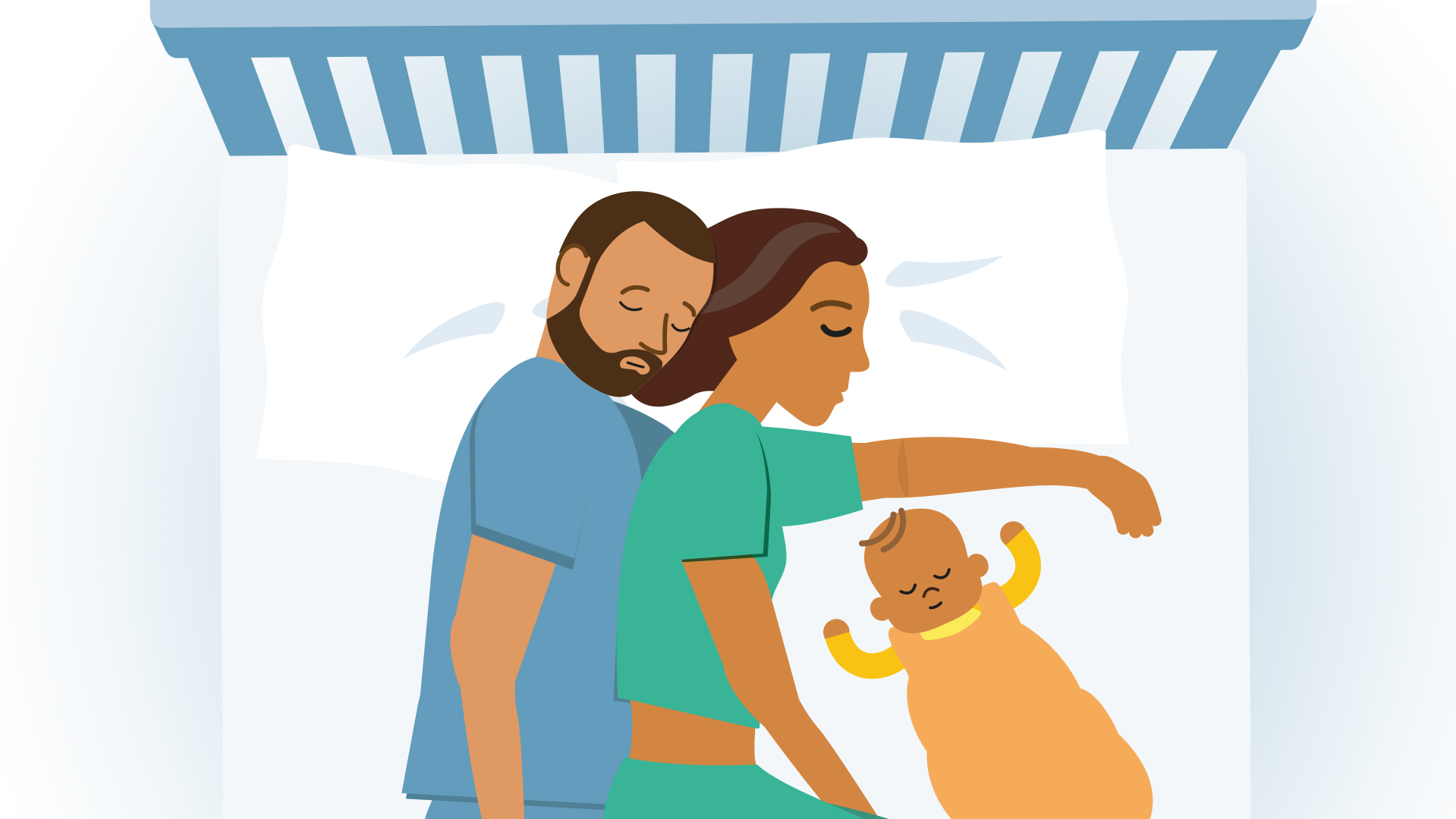
Difference between co sleeping and bed sharing. The terms bed sharing and co-sleeping are often used interchangeably but they have different meanings. Heres what I think of when I say co-sleeping. Bed-sharing a practice in which babies and young children sleep in the same bed with one or both parents is a subset of co-sleeping.
Room-sharing and bed-sharing are types of co-sleeping. This is the main difference. Co sleeping means the same room while bed sharing means the same bed.
Parents sleep in the same bed with the child. Strangulation an infants body may pass through part of a bed frame that is too small for the babys head trapping her. Child Abuse and Gynecologic and Neonatal Nursing 2 0 0 8 3 7 3 2 7 4 -8 1.
It may be in the same bed or just in the same room. Co-sleeping is good safe recommended but bed-sharing is bad dangerous verboten. Securely attach a crib to one side of the parents bed next to the mother.
The terms co-sleeping bed-sharing and room-sharing are often used interchangeably by parents when talking about the best sleep environment for their family. But at some point in the first few months after having a baby around half of all parents in the UK co-sleep or bed share with their newborn. Bed-sharing means sleeping in the same bed as your baby or sharing the same sleeping surface.
Co-sleeping is sleeping with baby in the room with you. Some parents also choose to sleep with their baby in other places. It is a vague term that is very confusing for parents.
This means you can still be close to your baby without actual bed-sharing which carries a risk of suffocation and over heating. Co-sleeping is a term used by many as an umbrella for anything from bed sharing to room sharing and anything in between. Baby has theyre own area instead of sleeping in the bed with you.
This means that their baby shares the same bed with an adult for most of the night and not just to be comforted or fed. MNOpeas answer first great minds think alike. Bedsharing means the child shares the parents bed.
Some ways of co-sleeping that different families use are. Co-sleeping essentially means sleeping in close proximity to your child. Blair and Ball 2004.
This is when a parent and child sleep in close social or physical contact of each other meaning that each can tell that the other is nearby. Bedside sleepers enable you to lean over and easily pick up your baby when feeding at night. A sleep arrangement in which an infant sleeps in the same room as parents or other adults but on a separate sleep surface such as a crib bassinet or play yard.
Bedside cribs allow you to have your baby sleeping right next to you at night but in the safety of their own crib. So whats the difference between co-sleeping and bed-sharing. Co-sleeping means sleeping in close proximity to your baby sometimes in the same bed and sometimes nearby in the same room room-sharing.
And while there are slight similarities between these three terms its important for you to understand the considerable differences especially as they relate to safety before making the best decision for your family. Sometimes theyre used interchangeably but to me theyre different. Many people use the terms bed-sharing and co-sleeping to describe the same thing but there are differences.
Bed sharing is what it sounds like. Co-bedding refers to infants typically twins or higher-order multiples sharing the same bed. Co-sleeping is when a parent is within arms reach of the infant but doesnt necessarily mean they share the same bed according to the website Very Well.
Co-sleeping with your baby Some parents choose to bed share with their babies. Bed sharing is the practice of falling asleep on the same surface as. E v id e n c e fo r c ry in g a s a trig g e r to s h a k in g.
Simply put a crib or bassinet in your room instead. There are conflicting views on bed-sharing safety and health compared to using a separate infant bed. This confusion can be cleared up by using two distinct terms bed sharing and room sharing.
JAMA Pediatrics 167 no. Bed sharing means you are sharing the same sleep space namely a bed with your baby.
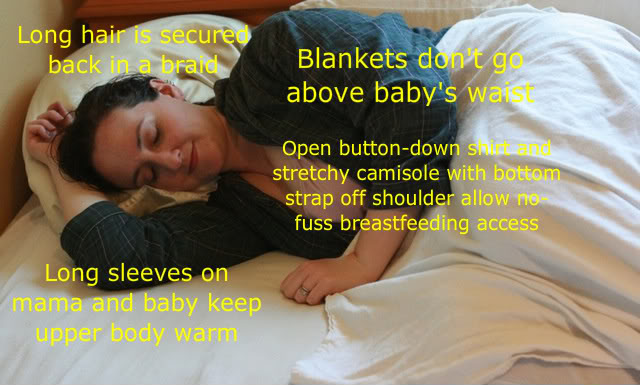
Breastfeeding and bed-sharing in England.

Newborn bed sharing positions. Bed-sharing practices of initially breastfed infants in the first 6 months of life. The rate of noncompliance increased to 29 by 6 months and 36 by 12 months. Of 9073 sleep-related infant deaths researchers found that 129 occurred on sofas.
Bed Sharing and Safety Information Sheet from BASISBaby Sleep Info Source 2018 One small study showed that mothers who did not breastfeed often placed their babies high in the bed at parents face-height positioned between or on top of pillows. This is a small but significant difference. Co-sleeping and Bed-sharing ACM Position Statement - 2014.
Excessively long hair on the mother should be tied up to prevent infant entanglement around the infants neck yes this. I get asked all the time Can I bed share safely. A study mother-infant pairs in New Zealand found that bed sharing infants were far more likely than were solitary sleepers to spend time with blankets covering their noses faces or entire heads Baddock et al 2006.
Blair and Ball 2004. The debate over safe bed sharing continues to rage in the clinical and public health community. This bed attaches.
You should never sleep together with your baby if any of the above points apply to you or your partner. At 3 months 85 of the infants slept in the same room as their mother and at 12 months that rate was 29. Results Of 18 986 participants 112 reported an infant sharing a bed as a usual practice.
A recent article released by NPR was titled Is Sleeping with Your Baby as Dangerous as Doctors Say and has brought a lot of attention to the topic of co-sleeping also called bed-sharing or sleep-sharing. We love articles that show that mothers and fathers intuition trump pseudoscience. Very small premature or low birth-weight babies appear to be at greater risk when bed-sharing but benefit greatly from co-sleeping nearby but on a separate surface.
This means you can hear see and yup smell baby. The answer is Yes BUT with a capital B-U-T Bed sharing comes with risks. Always place your baby on his or her back to sleep to reduce the risk of SIDS.
At 3 months 26 of the mothers did not use the recommended supine position for their infants nighttime sleep. Dress your baby in minimal clothing to avoid overheating. Bed sharing is a type of co-sleeping.
While you can feed in a side-lying position a lying back position is usually preferred to have maximum skin-to-skin contact with the baby right after birth. If you want to be closer than a crib you can place a bedside sleeper on your bed. Your baby was born premature before 37 weeks Your baby was born at a low weight 25kg or 5½ lbs or less Never sleep on a sofa or armchair with your baby this can increase the risk of SIDS by 50 times.
But at some point in the first few months after having a baby around half of all parents in the UK co-sleep or bed share with their newborn. If baby is sharing sleep with another person. The ACM supports the facilitation of women and their families making informed choices in maternity and child care including decisions about where their baby sleeps.
Bed sharing increased from 1993 65 to 2010 135. Breastfeeding bed-sharing and infant sleep. Step 1 Place a crib next to the bed.
This study prompted the need for further exploration of infant sleeping practices including bed-sharing in this population. Aside from the. Infant and Child Development 16 no.
BED SHARING between infants and family members particularly parents is common in many cultures. You can put a bassinet crib or play yard in the room. 12 Given the influence of the sleep environment on the risk for sudden infant death syndrome SIDS the benefits and hazards of bed sharing require scrutiny and further investigation.
You can be close to your baby but reduce the dangers of bed-sharing2 X Research source Doctors recommend room-sharing as a way to reduce the risk of SIDS by up to 503 X Research sourceStep 2 Choose a bedside sleeper. The ACM advocates a risk minimisation approach in which the individual familys circumstances are considered when providing. Breastfeeding was strongly associated with bed-sharing both at birth and at 3 months.
Why parents sleep with their infants. When people sleep under sheets or blankets these coverings tend to end up over the babys face. A recent case series study in the state of Victoria Australia identified 458 of sleep-related infant deaths occurred whilst bed-sharing.
The majority of these infants were sharing the sofa with another individual when they died. The National Infant Sleep Position Study. The safest place for your baby to sleep in their first six months is in a separate Moses basket or cot in the same room as you.
Infants a year or less should not sleep with otherolder child siblings -- but always with a person who can take responsibility for the infant being in the bed. Although bed sharing increased significantly among white respondents from 1993 to 2000 P 001 the increase from 2001 to 2010 was not significant P 48. This study of 1356 infants found that almost half of all neonates bed-shared at some time with their parents and that on any one night in the first month over a quarter of parents slept with their baby.
Persons taking sedatives medications or drugs or intoxicated from alcohol or other substances or otherwise excessively unable to arouse easily from sleep should not cosleep on the same surface with the infant. General Safety Guidelines for Bed-sharing. They did not consistently face the baby or adopt the protective sleep position.
Dont share a bed with an infant under 4 months of age a bassinet or crib next to the bed is a better choice. If you want to room-share place a bed for your baby right next to yours. Keep the baby back in the crib after the feeding session.
Remain awake while breastfeeding your newborn since bed-sharing may increase the risk of SIDS. An argument in favor of bed sharing is that the frequency and duration of breastfeeding is increased under bed.
We know however that families also bed share and so recommend making your bed a safer place for baby whether you doze off accidentally or choose to bed share. As rates of bed-sharing continue to rise in the United States so do the rates of infant deaths related to bed-sharing.
Bed-sharing letting your baby sleep in the same bed with you is one type of co-sleeping which is when parents sleep near their baby.

Bed sharing with 9 month old. Bed-sharing however is inherently risky specifically when it involves young infants. Room-sharing having your baby sleep in your room in her own crib or bassinet is also sometimes called co-sleeping. The safest place for your baby to sleep in their first six months is in a separate Moses basket or cot in the same room as you.
McKenna and McDade 2005. This is especially helpful if your baby is older 9-12 months or if you are sleep training a toddler. However certain situations make bed-sharing even more dangerous.
Bed sharing might also have a protective effect against SIDS. Babies should be slept in a clear sleep space which is easy to create in a cot or Moses basket. Bed sharing refers to having your baby sleep in bed with you rather than in a separate space such as a crib.
Experts recommend room-sharing without bed-sharing to reduce the risk of sudden infant death syndrome SIDS and other sleep-related deaths in infants. Thats because babies who bed share experience more frequent arousals from sleep and frequent arousals reduce the risk of SIDS Mosko et al 1997. Bed-sharing increases the risk of SIDS especially in preterm infants babies with low birth weight and healthy full-term infants younger than 4 months old.
But parents shouldnt feel guilty if they dont make it the full 12 months as moving baby earlier is fine and sharing a room for an entire year may not work for all families. Ideally they will have a big say in the decor. You should set your childs bedroom up at least two months before you plan to stop bedsharing.
Evidence suggests that it is less hazardous to fall asleep with the infant in the adult bed than on a sofa or armchair should the parent fall asleep. At 9 months of age babies who were sleeping on their own before they were 4 months old slept 40 minutes longer than babies who were still sharing a room with their parents and 26 minutes longer than those who began sleeping in their own rooms between 4 and 9 months. Regular bedtime routines started with babies help prevent future bedtime struggles.
Get the child used to their own room You can do this point at the same time as number two. Therefore you should not bed share with your baby if. Experts recommend room-sharing for the first six months and possibly a year since it can reduce the risk of SIDS.
Some people call sharing a bed with your baby sleep sharing or co-sleeping However co-sleeping can also be used as a more general term to refer to your baby sleeping close to you either in the same bed or nearby for example in a bassinet that attaches to the bed. Consider moving out temporarily If youre in a forced room-sharing situation but you dont mind sleeping away from your baby during sleep training then consider moving out for a bit. Mao et al 2004.
Because there is evidence that the risk of bedsharing is higher with longer duration if the parent falls asleep while feeding the infant in bed the infant should be placed back on a separate sleep surface as soon as the parent awakens. Teaching your baby how to fall asleep alone by putting him in bed awake helps prevent future night wakings. Our advice on co-sleeping with your baby will tell you how.
9-11 Month Olds Can. And while it might be tempting to bring her into your bed for those last few hours of sleep after she wakes or feeds she wont get why its OK at 4 am but not midnight. The most obvious danger related to bed-sharing is suffocation.
Room-sharing infants were four times more likely to end up in their parents bed during the night than those sleeping independently by 4 months and 9 months old. A baby sleeping on a couch alone or with a parent. You or any other person in the bed is a smoker even if you do not smoke in bed.
Your baby was born prematurely or with low birth weight. But at some point in the first few months after having a baby around half of all parents in the UK co-sleep or bed share with their newborn Blair and Ball 2004. A and Goldberg 2004.
Other things that further increase this risk of death while bed-sharing include. In fact you should keep your bed off limits even for cuddling for the first three months after youve stopped co-sleeping says Briggs. The odds of risky items being in.
Both the American Academy of Pediatrics AAP and the US Consumer Product Safety Commission strongly recommend against bed-sharing with an infant defined as sleeping on the same surface as an. As it relates to bed sharing specifically one study reported on p141 of Natural Parenting - Back to Basics in Infant Care found that routinely sharing the parents bed in infancy has been associated with greater self-reliance and social independence at preschool age than a history of solitary sleeping Keller M. Bed sharing may protect babies indirectly too.
Set aside a 5 to 10 minutes with the TV off for sharing books as part of your regular bedtime routine. The mother of the baby smoked during pregnancy. Your baby is younger than 4 months old.