If youre considering sleep training keep in mind that many experts recommend waiting until your baby is 4 to 6 months old. The term sleep training refers to different ways of teaching your baby to sleep through the night.
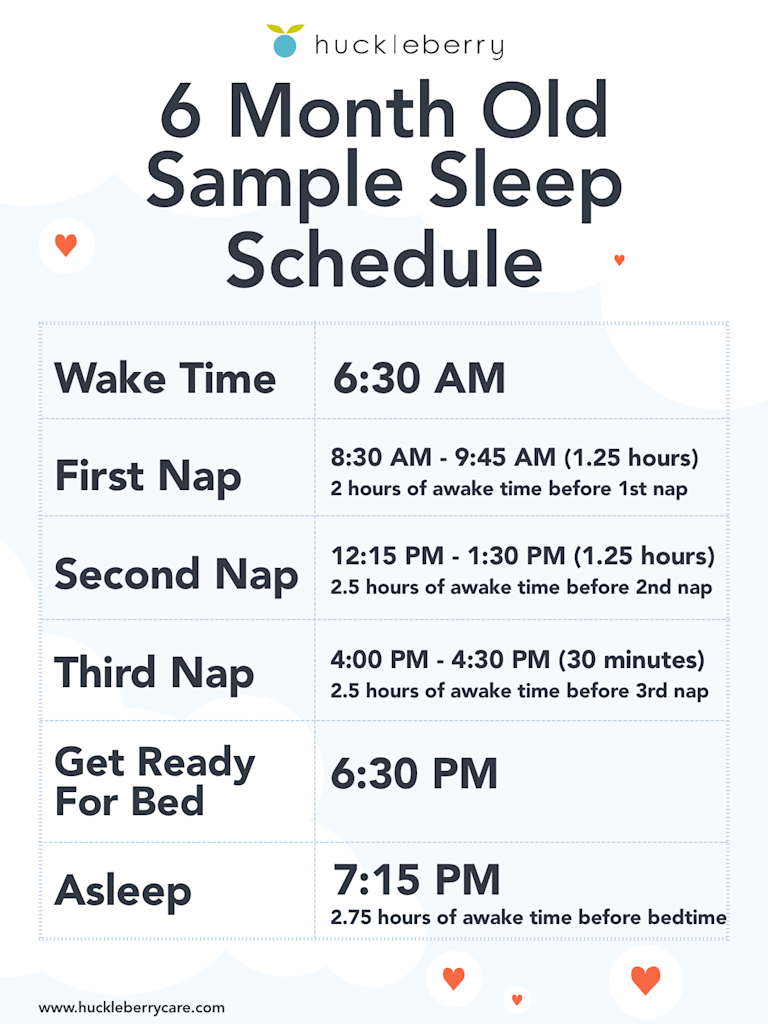 6 Month Old Sleep Schedule Bedtime And Nap Schedule Huckleberry
In the beginning this makes them sleepy pretty much around the clock.
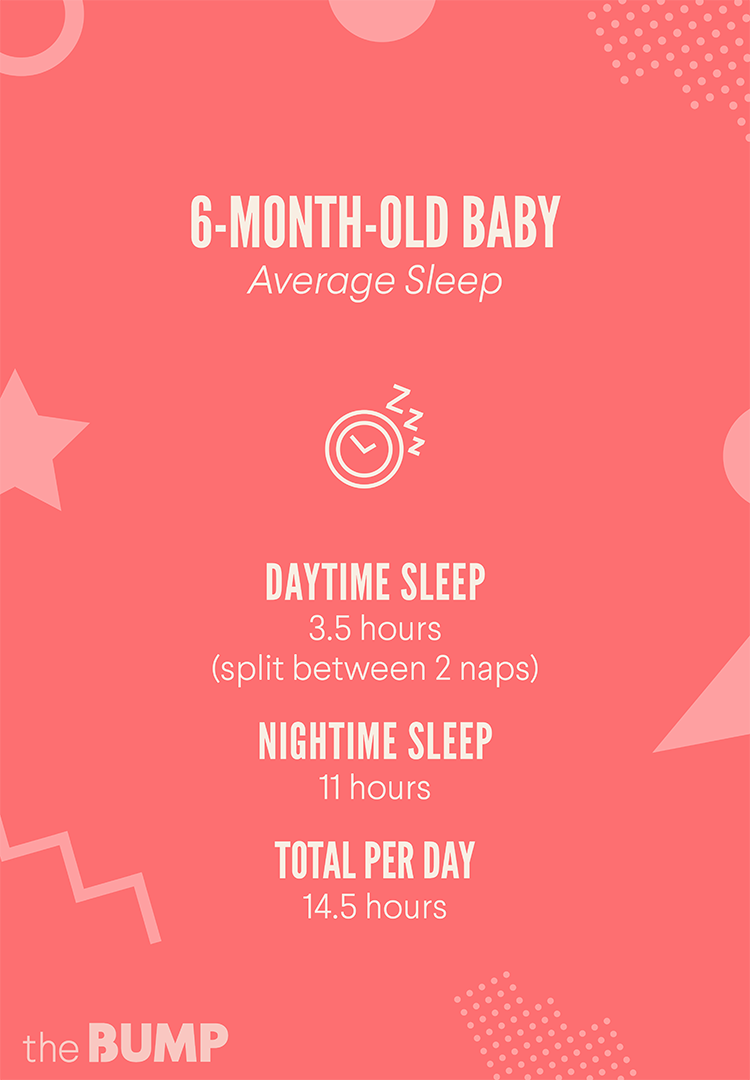
How many hours does 6 month old sleep. By three months babies are averaging 14-15 hours of sleep in each 24-hour period. 2 to 4 naps each 30 minutes to 3 hours usually fewer naps closer to 6 months Bedtime is around 6 pm. Sample sleep schedule for a 5-month-old.
Newborns generally sleep for 16-20 hours in a 24-hour period but they wake every 2-4 hours to be fed. 11 to 14 hours including naps. Traditionally experts have recommended that six-month-old babies sleep at least 14 hours per day.
But dont get your hopes up too high. They need lots of feeds because they have tiny tummies. By the time your child is 7 months old they may sleep for up to 11 hours during the night.
However a study of over 5000 babies found that American six-month-olds sleep an average of 129 hours per 24-hour period. Most babies dont start sleeping through the night 6 to 8 hours without waking until they are about 3 months old or until they weigh 12 to 13 pounds. Most 6- to 9-month-olds sleep 14 to 15 hours a day between nighttime sleep and naps and are capable of sleeping for long stretches at a time.
As your baby grows the hours of sleep they need gradually reduces. 12 to 16 hours. 8 to 10 hours.
When do babies start sleeping through the night. 12 to 16 hours including naps. During this age span you can expect your baby to sleep about 12 to 16 hours a day with some overnight stretches reaching five to six hours in a row this is what they call sleeping through the night.
Sleeping through the night is typically a milestone that occurs when a babys 3 to 6 months old. Children 3 to 5 years old. December 18 2020 6 month old babies sleep an average of 13-14 hours in a 24-hour period with 11-12 hours at night and 2-3 hours during the day.
Over the first 12 weeks most newborns start to develop day and night sleep patterns. Sample sleep schedule for a 6-month-old taking three naps 700 am. The AASM extends the top part of the range to 12 hours.
Through the night generally means five to six hours. On the other hand their daytime naps will decrease in both duration and frequency 4 hours. School-Age 6-13 Years Old The NSF advises that school-age children should sleep for a total of 9-11 hours every day.
Additionally the amount an infant sleeps appears to be related to culture. Babies also have different sleep cycles than adults. As school-age includes a wider set of ages the individual needs of any given child in this group can vary significantly.
4 to 6 months. Teenagers 13 to 18 years old. 9 to 12 hours.
However theyll tend to sleep for longer stretches at night. Toddlers 1 to 2 years old. Can you sleep train a 3-month-old.
Many babies this age consolidate their daytime sleep from three naps to two one in the morning and one in the afternoon. A typical 4-month-old should get between 12 and 17 hours of shut-eye a day including nighttime sleep and three or four naps. However keep in mind that babies at this age can stay awake for 60 to 90 minutes at a time while naps can be between 30 minutes and two hours.
Ideally 4- and 5-month-old babies should nap for 90 minutes or longer for two of the three naps the third one can be shorter. Total sleep per day. Babies 4 to 12 months old.
Puppy development from 1 to 8 weeks how many hours does a sleep at night healthy homemade dog treats crate train day even if you work 2021 what expect your 6 month old 3 months stages seven week behavior and pethelpful by fellow animal experts basic guide on house training puppies indoor outdoor dogs practices 2019 answer sweetpuppies amino 12 get through the tips for success schedule 10 online trainer. Baby sleep schedule 4 to 6 months. Your little ones naps will be consolidated too look for about three a day by 5 months of age.
Your morning starts around 6 am. About two-thirds of babies are able to sleep through the night on a regular basis by age 6 months. 10 to 13 hours including naps.
Your babys sleep schedule can vary quite a bit at this age depending on his sleep style stage of development preferences and temperament but generally he should be taking three naps a day and logging a solid 10 to 11 hours at night. Still every babys sleep needs are different and its normal if your child snoozes a little more or less than that. Below are the approximate hours of sleep needed by children of different ages.
Some babies are able to sleep this long when theyre as young as 6 weeks according to Baby Center. During the day the baby will be awake for just 40 to 90 minutes at a time. Bedtime routine 700 pm.
A good schedule can help your baby sleep better and eat better. 4 to 10 hours at one stretch and 9 to 12 hours total. 6-month-olds should nap 15 to two hours twice a day the third.
Babies are born with maternal melatonin. Children 6 to 12 years old. Dont push this as overtired babies are more difficult to settle down to sleep.
There is still a wide range of bedtimes from 730 to 10 pm as well as total sleep times from 9 to 12 hours although the average is only about 9 hours. Babies young children and teens need even more sleep to enable their growth and development.
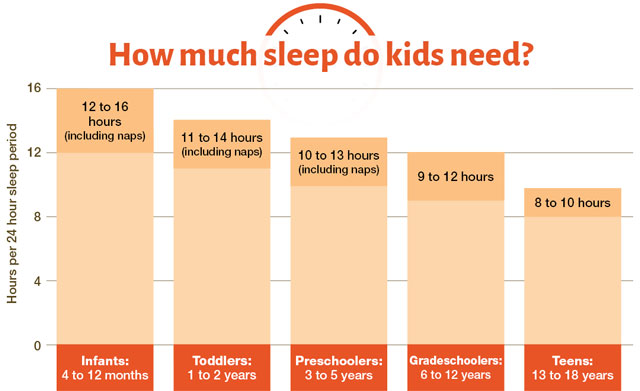 Healthy Sleep Habits How Many Hours Does Your Child Need Healthychildren Org
8 to 10 hours.

How many hours of sleep for a 10 year old. Children 3 to 5 years old. School-age children 6-13 years. 3 to 5 years.
Between 10 and 13 hours a day less than 7 or more than 12 is not recommended. The National Sleep Foundation and American Academy of Sleep Medicine guidelines agree that teenagers should obtain between eight and 10 hours of sleep each night. There is a common misconception that teenagers need less sleep than adults when in fact the opposite is true.
Teenagers 13 to 18 years old. 912 hours per 24 hours 2. Sleep experts recommend that adults obtain between seven to nine hours of sleep or an average of eight hours for optimal health.
10 to 13 hours. Sleep hours are very individual. Minimum Sleep As few as 7-8 hours of sleep may be appropriate for a 10-Year-old.
9 to 12 hours. For example newborns need 14-17 hoursday while adults aged 65 and over need 7-8 hoursday. The pediatrician that I substitute nurse for recommends that most 10 year olds go to bed around 930 if they are to wake up at 630so at least 9 hours.
There is no optimal amount for everyone. People over 65 should also get 7 to 8 hours per night. 1114 hours per 24 hours including naps 2.
8 - 9 hours per day. Between 11 and 14 hours a day less than 9 or more than 15 to 16 hours is not advisable. For example if your 10-year-old takes a two hour nap each day then they only need 8-9 hours of sleep at night and you can change their sleep schedule based on that.
3-5 year olds need 10 to 13 hours of sleep 6-13 year olds need 9 to 11 hours of sleep 14-17 year olds need 8-10 hours of sleep 18-25 year olds need 7-9 hours of sleep. 1 to 2 years. Babies 4 to 12 months old.
11 to 14 hours. 10 to 13 hours including naps. Newborns sleep 14-17 hours per day infants 12-15 hours teens 8-10 hours adults 7-9 hours and seniors 7-8 hours.
The younger a person is the more sleep they need. He said that around age 12 they can go down to 8 hours but up until age 12 at least 9-10 hours of sleep. A study we did in 2009 showed that 48 of parents with children under 5 didnt know that a 3 year old needs 12 hours sleep a night 33 didnt know that 6-12 year olds needs 10 hours sleep and 39 didnt know that teens need 8-9 hours a night.
Adults can function well even when they get at least 8 hours of sleep which means a childs sleep requirements are different and they need to sleep more to be more alert during the day. 1 Uncommonly adults may fall into two categories. Some people are better off going to bed early and waking up early early birds while others do better going to sleep later and waking up later.
8 to 10 hours a day. However the average for a 10-year-old is 10 hours which can vary by up to an hour either way. Studies show that teenagers should get at least 9 ¼ hours of sleep each night to stay healthy.
Toddlers 1 to 2 years old. 1417 hours National Sleep Foundation 1 No recommendation American Academy of Sleep Medicine 2. National Sleep Foundation guidelines 1 advise that healthy adults need between 7 and 9 hours of sleep per night.
Below are the approximate hours of sleep needed by children of different ages. Between 9 and 11 hours a day. 7 to 9 hours.
11 to 14 hours including naps. They should not sleep more than 16 to 18 hours. Knowing the general recommendations for how much sleep you need is a first step.
65 years and older. 8 to 10 hours. As we age the number of hours of sleep needed daily decreases.
7 to 8 hours. Additionally if they wake up later than most peers their nighttime bedtime can be later. 6 to 12 years.
9 to 12 hours. A short sleeper can be alright with getting less than the average recommended hours of sleep less than seven hours. Does your need for sleep change with age.
1013 hours per 24 hours including naps 2. 13 to 18 years. Short sleepers and long sleepers.
Children 6 to 12 years old. 9-11 hours Maximum Sleep As many as 12 hours of sleep may be appropriate for a 10-Year-old. The Foundation does not recommend less than 7 hours of sleep for a.
12 to 16 hours including naps. Recommended Hours of Sleep. 18 to 64 years.
1216 hours per 24 hours including naps 2. The Foundation does not recommend more than 12 hours of sleep for a school ager at the age of 10 years.
A two-year-old toddler on the other hand might be able to get enough rest with just eight hours of sleep. 1417 hours National Sleep Foundation 1 No recommendation American Academy of Sleep Medicine 2.
Https Www Parentingscience Com Sleep Requirements Html
Children 3 to 5 years old.
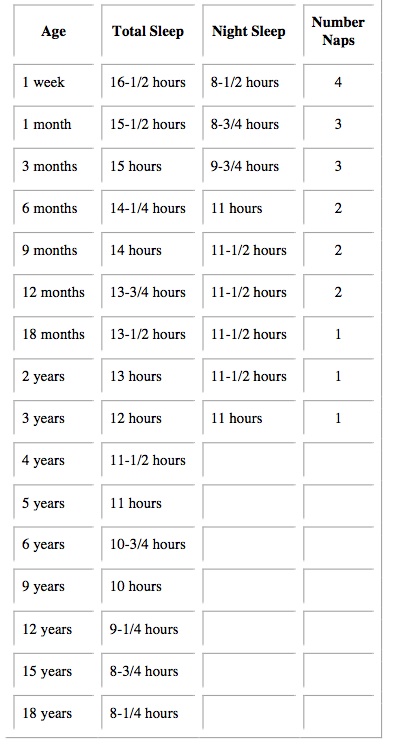
How many hours sleep 2 year old. And of course most of your toddlers sleep is happening at night now. 3 to 5 years. 10-11 hours Not less than 10 hours 16-18 hours Not more than 18 hours Toddlers 1-2 years Recommended.
Babies young children and teens need even more sleep to enable their growth and development. In fact a matter of just 30 or 60 minutes can sometimes make a difference in how your child breezes through the day. 1 to 2 years.
But common rules about how many hours of sleep an infant or a 2-year-old need might not be helpful when it comes to your own child. Where Should My Toddler Sleep. 12-15 hours May be appropriate.
If theyre in preschool. 9 to 12 hours. Many 3-year-olds are transitioning away from napping altogether but not all children do so at this age.
12 to 16 hours. People over 65 should also get 7 to 8 hours per night. Still sleep is very important to kids well-being.
1216 hours per 24 hours including naps 2. A toddler who fights the morning nap is probably ready for just an afternoon nap. You can use that number to help gauge how long your childs nap needs to be.
11 to 14 hours including naps. 4 to 11 months. There is still a wide range of bedtimes from 730 to 10 pm as well as total sleep times from 9 to 12 hours although the average is only about 9 hours.
Knowing the general recommendations for how much sleep you need is a first step. At around 18 months or sometimes sooner most toddlers condense their two naps into one afternoon nap. Below are the approximate hours of sleep needed by children of different ages.
13 to 18 years. National Sleep Foundation guidelines 1 advise that healthy adults need between 7 and 9 hours of sleep per night. Theres no need to create a random time just to have one but the goal is to have a normal time that you shoot for each day that your child can sleep to.
10 to 13 hours including naps. 7 to 9 hours. Compare that to a newborns need for about 16 hours of sleep.
Teenagers 13 to 18 years old. Ideally a 2 year old will get around 12-14 hours of total sleep in a 24 hour period. The average 2-year-old sleeps 12 to 14 hours a day most of which occurs at night with a one-hour to two-hour nap during the day.
Understand Your 2-Year-Olds Sleep Needs As your child grows the amount of sleep they need changes both for nighttime and naps. 3-year-olds need an average of 9 hours 45 minutes to 11 hours 15 minutes at night and 0 to 1 12 hours of sleep during the day. Between the ages of 1 and 2 most kids need about 1114 hours of sleep a day including one or two daytime naps.
Babies 4 to 12 months old. Sleep needs for 2-year-olds While it might sometimes seem like your little one could run on little to no sleep the reality is that 2-year-olds still need to be sleeping quite a bit each day. Or if it suits you a time that you are OK with your child waking up.
9 to 12 hours. 18 to 64 years. Converter or calculator.
11-13 hours Not less than 11 hours 18-19 hours Not more than 19 hours Infants 4-11 months Recommended. Choose the calculator you like. These numbers are simply averages reported for large groups of kids of particular ages.
11 to 14 hours. Most 2 year olds need approximately 12 hours of sleep in a 24 hour period on average. 1114 hours per 24 hours including naps 2.
Or if they are at home with you. 11-14 hours May be appropriate. 912 hours per 24 hours 2.
Recommended Hours of Sleep. 14-17 hours May be appropriate. Your 2 year old needs an average of 12 hours of sleep with 10 ½ -11 hours being at night and between a 1 ½ to 2 hour long afternoon nap.
At the touch of a button you can find out how many hours should a 2 year old sleep. And with his help find out how many hours should a 2 year old sleep. 10 to 13 hours.
12 to 16 hours including naps. Theres no magical number of hours all kids need in a certain age group. Understanding basic 2 year old sleep cycles.
8 to 10 hours. 8 to 10 hours. 8 - 9 hours per day.
Children 6 to 12 years old. Toddlers 1 to 2 years old. 1013 hours per 24 hours including naps 2.
To do this you need to write in the search box for example google how many hours should a 2 year old sleep and add to it an additional word. 6 to 12 years. Most of that sleep if not all will be made up of nighttime sleep.
How many calories do i burn pumping breast milk. Your body will burn more calories creating that higher volume of milk.
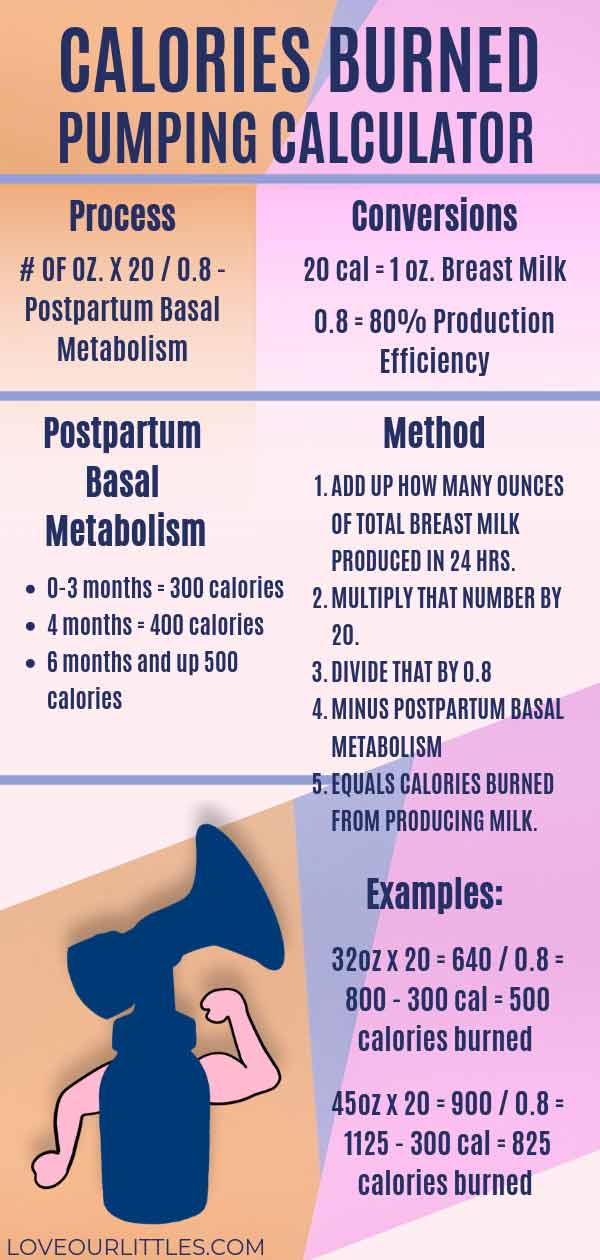 How Many Calories Does Pumping And Breastfeeding Burn Love Our Littles
Most mothers decide to add some pumping sessions during the day so that they can save for future meals.

How many calories do i burn pumping breast milk. So by doing some simple math none of this common core stuff you can accurately determine how many calories you are losing or need to replenish. This is because there are 20 calories in every ounce of breast milk. Therefore its very easy to calculate of your caloric output from milk each ounce of breast milk has 20 calories 10 mls has 68 calories and this energy isnt spontaneously created in your boobs.
If you produce 40 ounces of milk per day the calories of the milk would be equal to 800 calories. However it is much easier to see and calculate exactly how much breast milk is being produced throughout the day as an exclusive pumper. Also question is do you burn calories when you pump breast milk.
Click to see full answer. To give you a good idea on exactly how many calories are being burned in breast feeding you should know that a runner can burn 100 calories after running a mile. If you are pumping in between breastfeedings as well you might burn an extra 200 to 500 calories each day.
However a number of studies have estimated that the average calorie content of breast milk is around 65 calories per 100 ml or 19 to 20 calories per ounce source. If your baby eats 19-30 ounces a day thats anywhere between 380-600 calories burned. Pumping along with regular breastfeeding can stimulate a more substantial milk supply.
Although that doesnt mean breastfeeding is a weight loss miracle it can. How many calories do you burn while pumping. While burning 500 calories when breastfeeding sounds like a lot its important to keep in mind that you need to be bringing in extra calories before you can burn them just like when you were pregnant.
Do you burn calories when you pump breast milk. This gives us mothers a huge advantage as we can actually burn a lot without even breaking a sweat. A woman should consume between 2000 and 2700 calories each day while breast-feeding or pumping.
Breastfeeding exclusively eight to twelve times a day burns more calories than if youre combining breastfeeding and formula feeding. Some women say they lose the weight after stopping breastfeeding. They say its 20 calories per ounce of breast milk.
On average mothers can actually burn as much as 200-500 calories per day. Breast milk 08 energy required to make the milk 1000 calories burned. I seriously ate more breast feeding than when I was pregnant so on the bright side I didnt gain any.
To produce breast milk your body will use an extra 500 to 700 calories each day according to Baby Center. On average breastfeeding can burn between 200 and 500 calories per day. I was down to pre-pregnancy weight pretty quickly but I ate pretty horribly.
The act of pumping out breast milk probably doesnt burn many calories but there is an indirect benefit for your waistline. Mature breast milk looks very different from colostrum the milk produced in the first few days after birth. On average breastfeeding can burn between 200 and 600 calories per day.
So if you pump 20 ounces per day you are using 400 additional calories to feed your baby. Taking all of these numbers and variables together exclusive breastfeeding burns around 500 to 670 extra calories per day. You could be burning anywhere between 380 to 600 calories on a daily basis so that equates to about 20 calories per ounce.
Newborns often feed between 8 to 12 times a day which translates to 19 to 30 ounces of breast milk each day. 536 calories 56 g carbohydrates. Since breastfeeding burns about 500 calories a day if you have twins then youll be burning 1000 calories.
If youre new to breastfeeding you may have concerns about how many calories burned and how many calories you should be taking in. Recommended calorie intake during breastfeeding According to the. 40 ounces breast milk produced in 24 hours x 20 calories in 1 oz.
According to Hester and colleagues 2012 each 100 mL of colostrum yields approximately. Moms burn about 500 extra calories a day while producing breast milk which could lead to faster weight loss after birth. Avoid counting calories though.
The number depends on how frequently youre nursing whether youre supplementing with formula and how much milk your body produces. However you want to look at it. First you have to know that each ounce of breastmilk has 20 calories.
Instead eat a healthy meal or snack each time you feel hungry. A woman should consume between 2000 and 2700 calories each day while breast feeding or pumping. No wonder exclusive pumpers are starving.
You would take the amount of milk pumped in ounces and times it by 20. The act of producing milk is how a woman burns calories this is the same whether you breastfeed or pump. Studies show that our bodies burn approximately 20 calories per ounce of breast milk that we produce.
Are All Sleep Cycles the Same. There are three phases of non-REM sleep.
 Sleep Patterns Across The Human Lifecycle
Most adults thrive on seven to nine hours of sleep per night while teenagers with developing brains need about 95 hours.

How many sleep cycles per night. Non-REM sleep begins eventually moving into slow-wave sleep or deep sleep. The typical adult sleeps about 8 hours per night with lots of individual variability I personally think I need about 9 to 95 hours while my dad cant. While most adults are aware that they should aim for between 7 and 9.
Stages 1 2 3 4 and REM rapid eye movement. The average length of the first NREM-REM sleep cycle is between 70 and 100 minutes. The reason for such a specific cycling pattern of NREM and REM sleep across the night is unknown.
The average adult should receive at least seven hours of sleep for every 24-hour cycle. On average adults go through 46 sleep cycles per night and spend 90 minutes in each sleep cycle stage. A full sleep cycle is 90 minutes.
In a typical night a person goes through four to six sleep cycles 1. Most sleep trackers break your night down into three main categories of sleep. It takes on average about 90 minutes to go through each cycle.
Each cycle lasts on average 90 minutes says Grandner but some cycles can be as short as 50 minutes and some can be as long as 100 minutes or more. Is REM deep sleep. Not surprisingly infants with the fastest-developing brains of all need up to 16 hours of sleep per day.
Six full cycles are about 9 hours of sleep. The sleep cycle is an oscillation between the slow-wave and REM paradoxical phases of sleepIt is sometimes called the ultradian sleep cycle sleepdream cycle or REM-NREM cycle to distinguish it from the circadian alternation between sleep and wakefulnessIn humans this cycle takes 70 to 110 minutes 90 20 minutes. After passing through four stages of non-REM sleep your first REM cycle can last anywhere from one to ten minutes.
Updated on December 11 2019 There are five phases of sleep. No Rapid Eye Movement REM is the final stage 5 of a sleep cycle. Each stage can last from 5 to 15 minutes.
The first is light sleep and in this stage you drift in and out of sleep. Your eyes are closed but its easy to wake. It is normal for sleep cycles to change 2 as you progress through your nightly sleep.
The average length of the second and later cycles is about 90 to 120 minutes. Usually when you are sleeping you begin at stage 1 and go through each stage until reaching REM sleep and then you begin the cycle again. In fact it cycles through all of these stages multiple times a night.
That equates to between 6 to 9 hours of sleep per night. New research aims to identify not just how much total sleep you need but also how much of each stage of sleep you. REM deep and light although you actually cycle through five stages of sleep each night.
Sleeping less than seven hours can leave you more vulnerable to different diseases and medical conditions and also affect your ability to concentrate and increase your risk of errors and accidents. Changes in sleep across the lifespan. Experts have recommended that adults gets about 7 to 9 hours of sleep per night.
The average sleepwake cycle is five stages of sleep with stages 1-2 as light sleep 3-4 as deep sleep and the fifth stage as REM rapid eye movement sleep. How many sleep cycles per night. Each complete sleep cycle takes from 90 to 110 minutes.
Knowing how much time you. Not all sleep cycles are the same length but on average they last about 90 minutes each. An adult typically needs to complete at least four to six sleep cycles per night.
You go through all three phases before reaching REM sleep. Slow wave sleep also called deep sleep is an important stage in the sleep cycle that enables proper brain function and memory. If you can complete five cycles a night youd get 75 hours of sleep a night.
We go through several sleep cycles each night and the length of each REM cycles is longer for each new cycle. Your body doesnt just hit each sleep stage once a night nor does it spend an equal amount of time in each of them. So what is the ideal pattern of sleep.
Typically the body cycles between non-REM and REM sleep over a period of 90 minutes on average and should occur 4-6 times in a good nights sleep. This number gradually gets higher as the night progresses. A full normal sleep cycle from stage 1 to REM takes about 90 minutes to complete.
How many hours is a full sleep cycle.