It is realistic in the sense that the solution is sought always in reference to the reality of the situation. Mental ability to imagine the objects in space and move them to different apparent locations.
 What Is Spatial Intelligence What Does Spatial Intelligence Mean Spatial Intelligence Meaning Youtube
Spatial intelligence was focused in Thurstones theory.
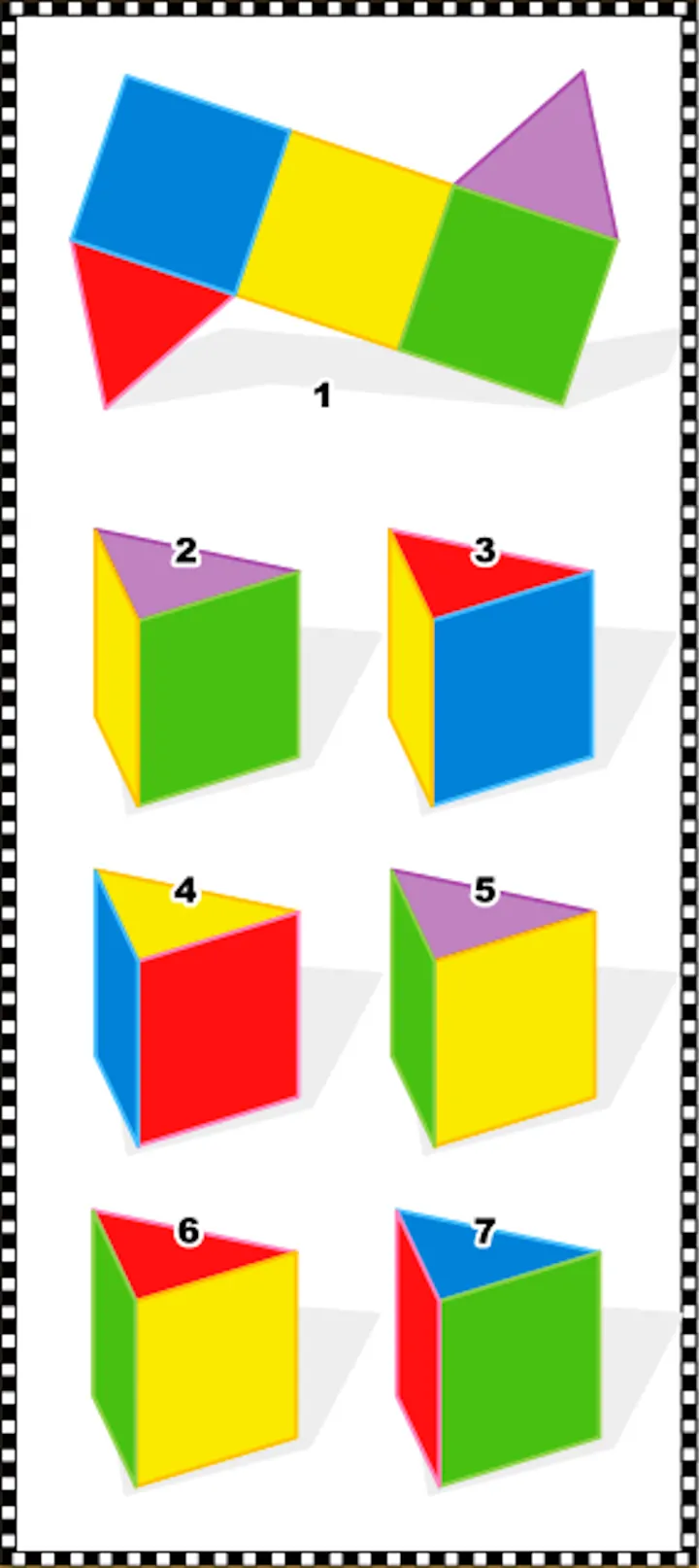
Spatial reasoning definition psychology. Spatial reasoning Techniques in artificial intelligence that attempt to emulate human reasoning during navigation and other spatial tasks. Spatial reasoning is a type of reasoning skill. Spatial-temporal reasoning is the ability to visualize spatial patterns and mentally manipulate them over a time-ordered sequence of spatial transformations.
What is spatial ability. The spatial reasoning of the blind person allows them to translate tactile sensations into mental calculations of length and visualizations of form. Spatial ability is not a.
It is one of the best forms of controlled thinking consciously towards the solution of a problem. We can solve many problems in our day-dreams dreams and imaginations but they are unrealistic solutions. Spatial ability can be seen as a form of intelligence where a person demonstrates the capacity to mentally generate transform and rotate a visual image and thus understand and recall spatial.
51 Spatial Abilities Definition As mentioned earlier spatial abilities embody the ability to produce transform and interpret mental images Poltrock and Brown 1984. Spatial-temporal reasoning is the ability to visualize spatial patterns and mentally manipulate them over a time-ordered sequence of spatial transformations. Spatial intelligence is also a primary mental ability in Thurstones theory of primary abilities.
Spatial reasoning is a critical skill that develops significantly in early childhood. Heres how parents and caregivers can recognize the spatial talk they are already using--and do more. Someone with strong spatial reasoning skills is good at navigating calculating distance working with geometric figures designing structures and comparing data.
Spatial ability or visuo-spatial ability is the capacity to understand reason and remember the spatial relations among objects or space. Its acquisition storage and retrieval manipulation and use by humans nonhuman animals and intelligent machines. Those with a gift for this kind of reasoning can often visualize how things fit together step-by-step and how they can be manipulated into different patterns.
Spatial intelligence is one of researcher Howard Gardners nine multiple intelligencesThe word spatial comes from the Latin spatium meaning occupying space A teacher may logically conclude that this intelligence involves how well a student may process information that is presented visually in one or more dimensions. Spatial thinking or reasoning involves the location and movement of objects and ourselves either mentally or physically in space. Spatial-temporal reasoning is the cognitive ability to picture a spatial pattern and understand how items or pieces can fit into that space.
Ability to visualize and manipulate patters and forms in space. Current research involves enhanced forms of logic and qualitative reasoning. Visual-spatial abilities are used for everyday use from navigation understanding or fixing equipment understanding or estimating distance and measurement and performing on a job.
Cognition is about knowledge. At the broadest level folk physics is composed of abilities and biases that support movement in space eg navigation the mental representation of images and generation of cognitive maps and. Spatialtemporal reasoning in psychology.
Ability to grasp perceptual details quickly and accurately and to determine similarities and differences between stimuli. This ability is important for generating and conceptualizing solutions to multi-step problems that arise in areas such as architecture engineering science mathematics art games and. Spatial ability is the capacity to understand and remember the spatial relations among objects.
Lohman 1993 greatly highlighted the pivotal role of spatial abilities and particularly MI in all models of human abilities. Ability to recall information such as lists or words mathematical formulas and definitions. Spatial cognition concerns the study of knowledge and beliefs about spatial properties of objects and events in the world.
It is not a single ability or process but actually refers to a considerable number of. What Is Spatial Reasoning In Psychology. Spatial intelligence is one of the nine intelligences on Howard Gardners Theory of Multiple Intelligences each of which is composed of a number of separate sub capacities.
This ability can be viewed as a unique type of intelligence distinguishable from other forms of intelligence such as verbal ability reasoning ability and memory skills. It is one of Gardners multiple intelligence theories. Its the ability to think about the spatial relationships between three-dimensional objects.
WHO IS THIS COURSE FOR. She earned her PhD.
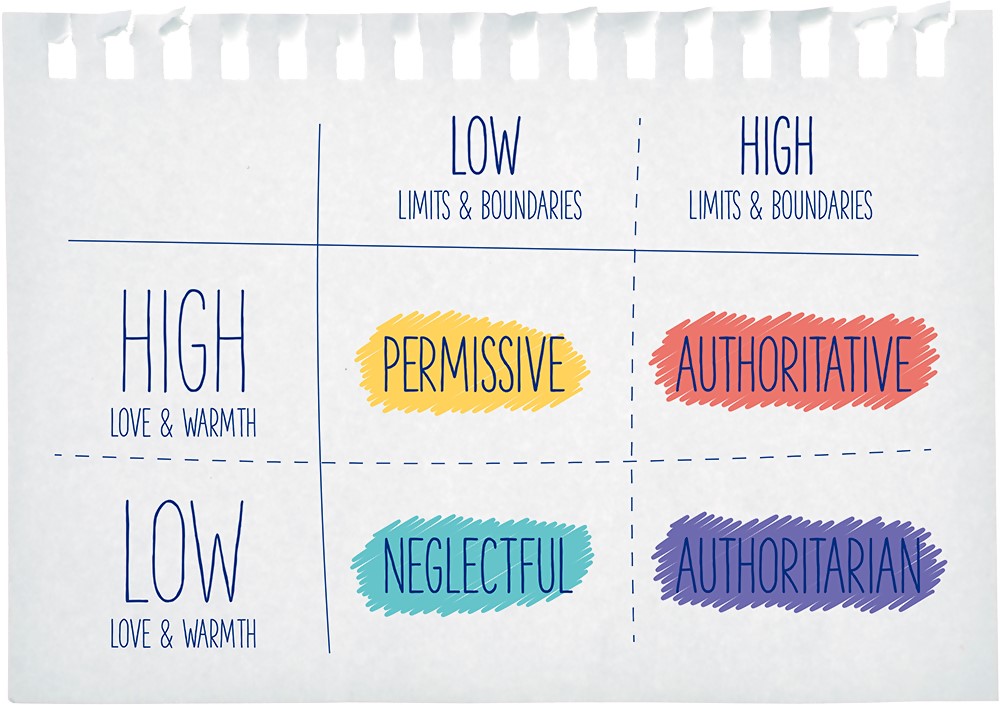 Why Parenting Style Is Important To A Child S Wellbeing Psychology
Your parenting style can affect everything from how much your child weighs to how she feels about herself.

Psychology and parenting. 1 Contact those who work closely with yours child and let them know that you want to be aware of any changes they may notice. Autonomy supportive parenting is the extent to which parents value and use techniques that allow children to feel they have control over their behaviors rather than being authoritarian or controlling. Positive reinforcement is one of four types of reinforcement in operant conditioning theory of human behavior see our article on Positive Reinforcement in Psychology and one of many approaches to parenting.
It is intended to encourage a desired behavior by introducing. Positive parenting is an approach focused on bringing out the best in kids focusing on the kids own potential. A Look at Parenting with Positive Reinforcement.
Findings could help healthcare professionals to identify situations at risk for psychological maladjustments both in parents and in children as the unresolved diagno. Simply put Positive Parenting focuses on bringing out the best in our children by focusing on their strengths. Ironically overly harsh or authoritarian styles of parenting can have the same effect.
Developmental psychologists have long been interested in how parents affect child development. Ultimately parents should strive to be loving but firm while allowing children enough space to develop. Parents make decisions about whats right for their children and families based on their unique values circumstances and lifestyles.
3 Involve your child in the setting of rules and consequences. Psychology of Parenting This website is intended to provide parents expectaing parents and everyone who has an interest in Developmental Psychology. Wednesday March 11 2009.
Here are some tips for parents to help their kids resist peer pressure. In psychology from the University of California at Berkeley. When positive psychology principles are incorporated into parenting practices it is called Positive Parenting.
Parenting a child with PKU had direct implications on the diagnosis resolution the parents mental health and the disease management. Cognitive Methods of Parenting. Ensuring childrens health and safety preparing children for life as productive adults and transmitting cultural values APA 2018.
Parenting style is a psychological concept that refers to a set of parental attitudes towards our child which influences them mentally emotionally physically and even spiritually as they grow up. However finding actual cause-and-effect links between specific actions of parents and later behavior of children is very difficult. You are going to learn lot more the science behind parenting psychologyThings that you are going to learn are such as reasoning setting standards transductive reasoning and many more that are able to help you in effective parenting.
Educational psychology researcher Wendy Grolnick has provided a clear framework of autonomy-supportive parenting styles. Parents play an essential role in raising children by providing environments and relationships that enable health and development to occur. Education is teaching our children to desire the right things.
Before providing a definition of positive parenting lets take a step back and consider what we mean by parents While a great deal of parenting research has focused on the role of mothers. 4 Practice communication with your child. Care showing acceptance and affection consistency maintaining a stable environment choices allowing the child to develop autonomy.
Its a parenting style that shares the same interest as positive psychology in its focus on potential strengths and abilities as a way to create happy and meaningful lives. Psychologists and neuroscientists are using new techniques to identify the source of language and reading problems such as dyslexia in the brain and create neural processing exercises disguised as computer video games to significantly improve childrens language learning and reading. According to the American Psychological Association parenting practices around the world share three major goals.
Some children raised in dramatically different environments can later grow up to have remarkably similar personalities. Parents may find the Four Cs to be a helpful acronym. The concept behind the parenting styles was first introduced back in 1967 by Diana Baumrind1 an American developmental psychologist who studied preschoolers in her landmark study.
Instead of actively attempting to prevent negative behaviour it emphasizes recognizing and encouraging positive behaviours. Diana Baumrind was one of the most renowned researchers of parenting styles. Parenting styles in psychology are a manifestation of parental behavior.
Its important to ensure your parenting style is supporting healthy growth and development because the way you interact with your child and how you discipline her will influence her for the rest of her life. This valuable parenting information is from a psychology perspective and information is from credited sources. 2 Get to know your childs friends.
Childrens psychosocial well-being is influenced by all individuals involved in their upbringing.
The broad assortment of fervid words expressing adulation admiration affection appreciation devotion fondness and downright reverence for our partners are instrumental in securing for. In the scientific community this baby talk is termed infant-directed speech.
 Motherese The Sound Of Baby Talk Across Languages Disabled World
CDS is characterized by a sing song pattern of intonation that differentiates it from.
Baby talk definition psychology. For example when we see a child reaching for the electrical socket we do not call out their name as we would during a game of hide-and-go-seek. Motherese is really just baby talk It is when the mother speaks to the infant in a very high pitched voice along with a slower rhythm and an inflated tone. Refers to pre-speech sounds such as mamama made by infants from around 6 months of age.
We generally refer to this shift in tone syntax and attitude as baby talk Its something that we expect in that particular interaction so much so that an adult who approaches a newborn with. See also babbling- prespeech development. Refers to any sounds used by a child in the early stages of speech development.
Features of baby talk present infants information about their language. Posted Nov 22 2013. Which is a forerunner of word production.
Motherese also called Parentese Baby talk Caretaker speech Infant-directed speech IDS Child-directed speech CDS is defined as a term used in the study of child language acquisition for the way mothers often talk to their young children. Baby talk was most effective when a parent spoke with a. Baby talk is a type of speech associated with an older person speaking to a child.
Featured Neuroscience Open Neuroscience Articles Psychology. This infant-directed speech or IDS is recognizable for its higher pitch and more melodic emotionally-charged tone. Babbling is usually regarded as practice in vocalization which facilitates speech development.
Baby talk is a simplified speech pattern with distinctive paralinguistic features of high pitch and exaggerated intonation contour that is usually associated with speech to young children. By Catherine Laing For The Conversation. Our psychology articles cover research in mental health psychiatry depression psychology schizophrenia autism spectrum happiness stress and more.
According to researchers using baby talk words such as bunny and choo choo can help boost language acquisition in infants between 9 and 21 months. Twin babies have conversations with each other complete with gesticulations. This is an infant-directed type of speech opposed to an adult-directed type of speech.
Baby Talk Words Build Infants Language Skills. It may sound like dadadadada to us but clearly something is going on. Most research of contexts.
Infant vocalization or babbling is a stage in child language acquisition during which an infant appears to be experimenting with making the sounds of language but not yet producing any recognizable words. More than 22 of speech to residents in one nursing home was identified as baby talk. Babbling begins around 5 to 7 months of age when a baby s noises begin to sound like phonemes.
There are direct relationships between the way we speak and what we wish to convey. Whether you think its cute or it makes you squirm baby talk is a compelling scientific phenomenon. Baby talk is one of a set of several-speech significance is not based on a taxonomy of registers that simplify clarify and add affect linguistic co-ocurrence rules nor on a catalog to language Ferguson 1977.
Psychology is the study of behavior in an individual or group. All around the world people use a special register when they speak to the very young. Baby talk tends to be spoken slowly with key words at the end of a phrase.
Psychology Definition of BABY TALK. August 1 2018. Nonverbal Infant Communication Learning how to understand your baby without words.
It is also called caretaker speech infant-directed speech IDS child-directed speech CDS child-directed language CDL caregiver register parentese or motherese. Also known as babble. Reviews the research concerning the possible functional roles of the prosodic aspects of infant-directed speech baby-talk and shows that this style of speaking could have both attentional and.