Help your toddler ease his separation anxiety at night by practicing independent play and alone time during the day. This can be a trying and exhausting situation for both you and your baby but rest assured that this period will pass.
 Separation Anxiety Babycenter
Separation anxiety decreases as a child ages but similar feelings may return for short periods of time for other reasons.

4 year old separation anxiety at night. Be calm firm and loving. Your child has trouble falling asleep alone at night. Separation Anxiety in Babies at Night It can be challenging if your baby feels anxious when you leave the room before bed or wakes and is upset to find youre not there during the night.
According to the Diagnostic and Statistical Manual of Mental Disorders Separation Anxiety Disorder is seen in 4 of children and 16 of adolescents making it the most prevalent anxiety disorder among children under the age of 12. A child with separation anxiety disorder may have an unreasonable fear of school and will do almost anything to stay home. She cried for the first 3 weeks or so then settled down well.
Both school-age children and adolescents can struggle with separation anxiety and in some cases it can result in Separation Anxiety Disorder. Nicole Johnson President and Owner of The Baby Sleep Site reassures us that this is normal behavior particularly with little kids. It can do real damage to a babys nap schedule and it can cause even the best sleeper to start waking frequently at night.
Watch your son for clues and work to decrease any source of stress. There is a tendency as a parent to want to respond to your childs cries. Create a positive sleep environment in his room and follow a consistent bedtime routine so he feels less anxious about what to expect.
Your child resists going to school camp or play dates without you there. She had the typical separation anxiety as a toddler but it got more intense after the divorce. Babies and toddlers often get clingy and cry if you or their other carers leave them even for a short time.
And this makes sense. It can be caused by strange noises by an over-attachment to the parents and by the child of any age being lost in their own thoughts. Or you might suddenly find your tween or teen wants to crawl into bed and cuddle at night.
Its natural to be concerned that your child is miserable. When older toddlers or preschoolers are sick or stressed separation. Leave her for a few seconds initially then gradually extend the time so she gets used to you leaving and then coming back.
The memories are made but the way the brain develops at that age overlays the memories. Four years later its back with a vengeance. Leave the room but continue to talk or sing to your little one.
During this stage which can last for several months a child may wake several times and cry anxiously for one or both parents often expressing a strong preference for one. My just turned 4 year old daughter started school last September. Then as we settled into a new life with new routines her separation anxiety went away.
A baby whos deep in the throes of separation anxiety certainly wont want to be left alone to nap or to sleep all night. Reluctance to go to sleep. New separation anxiety in 4 year old.
On top of that she wakes me up several times a night. The teacher is pleased with her progress and she seems to have lots of friends gets invited to birthday parties and always has lots of kids saying goodbye to her. Any major change could have triggered separation anxiety.
Even a particularly bad dream can linger and cause anxiety. Bedtime is now the ultimate struggle. Separation anxiety and fear of strangers is common in young children between the ages of 6 months and 3 years but its a normal part of your childs development and they usually grow out of it.
Kids who worry are often quietly worried says Dr. Physical sickness like a headache or stomach pain. However its incredibly important not to direct that anger or irritation at your child.
Its hard when your childs anxiety is depriving you of sleep and its natural to feel resentment. Separation Anxiety Sleeping Trouble in Young Children Beginning in the second half of the first year separation anxiety can cause many nights with disrupted sleep. But separation anxiety also affects sleep.
Another thing we see is nighttime fears come into play. But there are symptoms of separation anxiety disorderwhich can vary depending on a childs age. This regression is a threat-based response to increase perceived safety receive comfort and reduce anxiety.
Kids generally cant remember from before about 3 years old. Rebou Jun 19 2011. Nighttime separation anxiety is basically just a fear of being alone at night away from the parents.
You may have to have the caregiver restrain your child gently and lovingly of course. Do not prolong separation even though your child may very well seem inconsolable throw a temper tantrum and beg plaintively to come with you. We find that 3-4-year-olds do start to drag out bedtime near when they drop their nap Johnson said.
Here are some strategies for helping her cope with separation anxiety at night. If your child feels rejected this will only deepen the separation anxiety and make things worse. Separation anxiety in a four year old isnt unusual though I completely understand how distressing it is.
Separation anxiety disorder can make children insomniacs either because of the fear of being alone or due to nightmares about separation. Older children may regress under acute stress and act in ways that arent as common for their current age Meyers said. Acknowledge his feelings as valid while teaching him how to cope with them.
It can do real damage to a babys nap schedule and it can cause even the best sleeper to start waking frequently at night. But the symptoms of SAD are more severe.
 Older Kids And Separation Anxiety How It Happens And What To Do Riley Children S Health
You can talk to your child about what youre going to do in the morning leave favorite toys with them make a routine of goodbyes and reunions show your love and play peek-a-boo games with them to ease their separation anxiety at bedtime.

Sleep separation anxiety in 5 year old. It is a normal part of growing up. If your child feels rejected this will only deepen the separation anxiety and make things worse. A baby whos deep in the throes of separation anxiety certainly wont want to be left alone to nap or to sleep all night.
Separation anxiety disorder in children. She should be fully out of it by age 3. Try some of those belly breathing exercises cuddle time talking through it and reassuring him that it will be OK.
But separation anxiety also affects sleep. Separation anxiety disorder SAD is a condition in which a child becomes fearful and nervous when away from home or separated from a loved one -- usually a parent or other caregiver -- to whom the. Separation anxiety rears its head most often when parents are transitioning their babies into daycare or into the babysitters care.
But the period of extreme neediness usually peaks between 10 and 18 months and eases by 2 years. Fears anxiety or apprehension over some dreaded experience grips childrens will interfering with their ability to assume the normal expectations for their age. Separation anxiety typically lasts two to three weeks and can pop up throughout infancy and toddlerhood as well as later in childhood.
Your child resists going to school camp or play dates without you there. These kids experience a continuation or reoccurrence of intense separation anxiety during their elementary school years or beyond. Fortunately you can prevent sleep problems at night during separation anxiety phases with a few simple ideas and techniques right below.
The leave- taking can be worse if your infant is hungry tired or not feeling well. When is separation anxiety most common and how long does it last. Your child has trouble falling asleep alone at night.
Separation anxiety tends to wax and wane throughout the toddler years. Nighttime separation anxiety is basically just a fear of being alone at night away from the parents. During this stage which can last for several months a child may wake several times and cry anxiously for one or both parents often expressing a strong preference for one.
Although some babies display object permanence and separation anxiety as early as 4 to 5 months of age most develop more robust separation anxiety at around 9 months. Separation anxiety at night can result in disrupted sleep but there are steps you can take to ease your childs fears. Other times separation anxiety occurs because children are worried about life at home -- perhaps because parents are fighting.
Say goodbye when you leave. For babies under two years its most common during the following ages. Sometimes it occurs out of the blue after a change in the environment.
Baby separation anxiety is an often unrecognized cause of disturbed sleep. Your child refuses to settle at night or for naps stops sleeping through the night often wakes up crying cant self-soothe anymore etc. Keep transitions short and routine if its a tough day.
It can be caused by strange noises by an over-attachment to the parents and by the child of any age being lost in their own thoughts. As children reach preschool and school age theyre less likely to have separation anxiety. This is a no rmal stage in childrens emotional development and.
And this makes sense. Separation anxiety typically appears in the first few years of a childs life but generally wont last more than a couple of weeks at a time. Kids who worry are often quietly worried says Dr.
Waking up multiple times during the night Waking up crying in the morning They want to sleep in your bed every night. But there are symptoms of separation anxiety disorderwhich can vary depending on a childs age. Nearly all children between the ages of 18 months and 3 years old have separation anxiety and are clingy to some degree.
Beginning in the second half of the first year separation anxiety can cause many nights with disrupted sleep. Sleeping by themselves sleepovers at a friends house sleep away camps or other opportunities that entail overnights away from home are passed up. There is a tendency as a parent to want to respond to your childs cries.
Separation anxiety is normal in very young children. All children and teens feel some anxiety. Watch your son for clues and work to decrease any source of stress.
But first a quick look at what it is and how to spot it. In time this separation anxiety will pass and bedtime struggles will become a memory. If your preschool-age or school-age child seems particularly and regularly upset about being separated from you its possible he has.
If separation anxiety is excessive enough to interfere with normal activities like school and friendships and lasts for months rather than days it may be a sign of a larger problem. A child must have symptoms of SAD for at least 4 weeks. Both school-age children and adolescents can struggle with separation anxiety and in some cases it can result in Separation Anxiety Disorder.
Even a particularly bad dream can linger and cause anxiety. Most children outgrow separation anxiety by around 3. Any major change could have triggered separation anxiety.
In the meantime here are some tips and tricks to help departures go as smoothly as possible. Of course therell always be times when they only want to be with you. Not only does this affect your toddler going to sleep but there are also other signs of separation anxiety in toddlers such as the following sleep disturbances.
To that Allen says Stay calm. Excessive crying crying for 3 h per day on 3 days per week for 3 weeks was assessed via Baby-DIPS.
 Separation Anxiety A To Z Guide From Diagnosis To Treatment To Prevention Drgreene Com
Stranger anxiety typically peaks between 12 and 15 months and then begins to gradually decrease as your baby continues to grow and develop.

Anxiety baby crying. Anxiety crying can range in intensity from slight to moderate to severe. Prior to that they dont see you or another caregiver as separate from themselves so theyre easy peasy with just about everyone. Separation anxiety is most common in infants between 8 and 12 months though it may start earlier and can definitely reappear later.
Baby separation anxiety is an often unrecognized cause of disturbed sleep. They might not want to play on their own. If you have found yourself bouncing patting humming or soothing a fussy baby you are not alone.
Its normal to feel stressed when babies cry. They might start waking up early or they might start having sleeping problems Psychology Today 2018. Many parents have to cope with babies who cry a lot in the early months of life.
Separation anxiety is not only a phase that will pass. Hold your baby softly when it cries with compassion knowing that your baby is not your enemy but only wants you to be safe. They tend to flail their legs and scream until you hold or feed them to calm them down.
This is the reality of having a child. This is very common in the first 6 to 8 months but once theyre a year old calling your baby from another room will be enough to calm them down. The crying will stop Which hopefully.
Your baby might show a number of signs of separation anxiety. In other words separation anxiety is simply your babys fear of losing you. Needless to say that baby separation anxiety is hard on the baby and taxing and wearing for parents but hold out.
It can also come in waves where you cry uncontrollably one moment and it suddenly eases off the next. Dont try to force the. Your anxiety is reacting based on baby-instinct to keep you alive.
Separation anxiety is a healthy reaction to separation and is a normal stage of development. Signs of Separation Anxiety in Infants The timing and intensity of the separation anxiety may be different for different children says Jessica Mercer Young PhD a research scientist at. It typically occurs in most babies between six to eight months old when they realize that they are independent of you.
Separation anxiety can lead to disrupted sleep. Signs of separation anxiety are rarely physical Brooke says and can include. Your baby is crying for you when you leave him or her in day care or with a babysitter.
During this phase of emotional development your baby may get up several times during the night and cry for you or your partner. The reasons for a baby waking up crying canrange from something normal as a growth spurt or hunger to a health problem. So heres 5 points to upgrade your thinking if you are anxious over your babys crying.
Lifetime and prospective information on maternal anxiety and depressive disorders was assessed via standardised diagnostic interviews Composite International Diagnostic Interview for Women. This is also the reason why your baby may cry every time they wake up from a nap and find themselves alone. In short when your anxiety baby is crying remind yourself to let the baby cry and hold the baby softly and with compassion.
Crying when you leave a room even for a short period of time. Crying spells can precede accompany or follow an episode of nervousness anxiety fear and elevated stress or occur out of the blue and for no apparent reason. But its never happened before why now.
Your child refuses to settle at night or for naps stops sleeping through the night often wakes up crying cant self-soothe anymore etc. Sometimes a crying baby has everything she needs food clean diaper good health and loving arms and will still cry. Separation anxiety at night usually starts when your baby is around 6 months old and peaks between 10 and 18 months.
Having a baby changes the structure of the brain so that regions that control empathy and anxiety have increased activity and that along with hormonal changes can make new moms react to a babys cry with intense feelings of protectiveness and worry. They might cry when left with someone else. The development of stranger anxiety coincides with a.
Its also a healthy sign in your child. Grandma says Let me hold my grandson and as soon as you hand the baby over he starts crying. Dr Leah Alexander MD FAAP.
It is normal for a baby to wake up crying from sleep once or twice in the night. Resistance to being put down to bed. Separation anxiety in your baby starts basically because theyre getting smarter.
You are learning a new skill. It usually gets better by the time your baby turns two. Your child is getting smart.
According to the American Academy of Pediatrics AAP most. This is their only way of communicating their needs to you and it is not a reflection of you doing anything wrong.
But there is treatment available. Your newborns hand trembling chin quivering and startling at loud noises are not signs of baby anxiety.
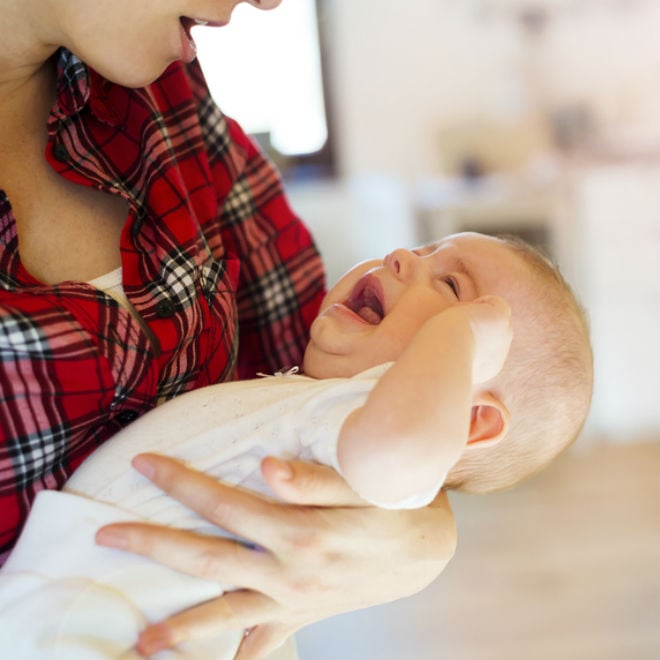
Some have more intense reactions than others and for some the stage lasts longer than others but almost all babies have it to some degree.
Can a baby have anxiety. What is postnatal anxiety. Both postpartum anxiety and PPD can affect your bond with your baby. My own healthy high need baby son was only three months old when baby separation anxiety mercilessly set in and it lasted a lot longer than 2-5 months.
You may not be able to respond to what your baby needs. 711 in Scottsdale Ariz. Advertisement page continues below.
Parents need and deserve help. Having a mental health disorder can also increase the chance of postpartum mood disorders. Someone suffering from an anxiety disorder during pregnancy can have problematic outcomes such as miscarriage high blood pressure a baby with low birth weight postpartum depression and premature labour.
Before then explains Jean Wittenberg head of the Infant Psychiatry Program at Torontos Hospital for Sick Children the baby doesnt have the cognitive structure to recognize mom as an individual or to remember her when she is gone. It will lessen and pass. Anyone might feel a little anxious when a new baby arrives but for some people anxiety can become a real problem and they will need professional help.
After talking about your symptoms with your doc you may get medications a referral to a. Babies can show signs of separation anxiety as early as 6 or 7 months but for most babies it peaks between 10 to 18 months and eases up by 2 years. Its difficult to say.
You may be feeling anxious during your pregnancy then begin to worry if it this is affecting your baby and so become even more anxious. Stranger anxiety is a perfectly normal developmental stage that. When you have depression or anxiety during pregnancy or after birth it can be hard to become close to your baby.
Being overly anxious and pregnant can result in danger to the fetus and the mother during pregnancy. Children can have stranger anxiety feelings until theyre 2 years old. Almost any baby development book will tell you separation anxiety is an older baby phenomenon typically occurring at about eight months of age.
Being concerned about whether anxiety or stress will affect your baby is understandable but it can also create a vicious circle of thoughts. Separation anxiety is most common in infants between 8 and 12 months though it may start earlier and can definitely reappear later. Some babies cry scream and kick in response to unfamiliar situations while others remain calm.
Nearly all children experience separation anxiety between the ages of 7 and 18 months. The difference between the two stays with them throughout their lives predicting their susceptibility to depression and anxiety disorders finds a new study presented at the annual meeting of the American College of Neuropsychopharmacology Dec. Separation anxiety another normal behavior also develops during this period.
Untreated anxiety can make it difficult to feel connected bonded with the baby both during pregnancy and after delivery. These are caused by your babys immature nervous system and disappear within a few months. Both of these stages stranger anxiety and separation anxiety happen because your baby is reaching a stage of cognitive development where they can recognize faces other than their parents.
Taking a baby education class will boost your skills and confidence. There is plenty of support available so its helpful to keep an eye out for the signs. Each baby is different but typical baby separation anxiety is said to occur somewhere between 7-18 months and last about 2-5 months.
Most commonly separation anxiety strikes when you leave your child to go to work or run an errand. There are many studies that have show that stress and anxiety during pregnancy can increase a womans risk of miscarriage preterm delivery and giving birth to a baby that is low birth weight So stress and anxiety can cause affect the health and even the viability of a fetus. Certain patterns of brain connectivity seen in newborn babies can predict the babys likelihood of showing early symptoms of mental illness including sadness excessive shyness nervousness and separation anxiety according to findings published in the February 2017 issue of the Journal of the American Academy of Child and Adolescent Psychiatry.
However these are only general guidelines. And if there are older children in the house they may be missing your support as well. Not much research has been done on anxiety disorders during pregnancy and results have been inconclusive.
Stranger anxiety is the distress that babies experience when they meet or are left in the care of people who are unfamiliar to them. Women with anxiety during pregnancy may have a slightly higher risk of preterm birth but a definitive link hasnt been found. The development of separation anxiety demonstrates that your baby has formed a healthy loving attachment to you.
According to the American Academy of Pediatrics AAP most. Postnatal anxiety is common both in men and women.