Building blocks also prove amazing for kindergarten kids as they learn to develop skills in design balance stability and representation. Banging plastic blocks together or knocking over tall towers can be hard on the ears.
 Children Building Blocks In Kindergarten Group Kids Playing Toy Floor Children Building Blocks In Kindergarten Group Kids Canstock
After a group of 8-year-olds participated in just five 30-minute sessions of structured block play they showed improvements in mental rotation.

Child playing with building blocks. And a more recent experimental study tested the effects of structured block play -- the sort of play we engage in when we reproduce a structure from a model or blueprint. Kids need free time to build and develop their imagination and creativity. Beyond artistic creativity building blocks allow children to practice creative problem-solving skills.
Your child will have so much fun. Children Playing With Blocks. We want to be clear that open-ended and unstructured play is still a critical part of block play.
Talk to your child while you play with the building blocks. Blocks enhance childrens problem-solving abilities mathematics skills and language and literacy abilities. Example 12 A child playing with building blocks which are of the shape of cubes has built a structure as shown in fig.
It will become a reward for them seeing the product of their hands as they are able to create something amazing out of loose blocks that initially may not have made any sense to them. Make Your Own Cardboard Building Blocks. Pick some old shoe boxes and cardboard boxes to make giant building blocks for play time.
Block play is an activity in which your child can do both play alone or together with somebody else - friends siblings relatives etc. Or you can take the blocks outside and play with them in the sandpit or in the garden. By allowing your kids to play with building blocks this will definitely boost their self-confidence after tackling a huge problem of how to turn their imagination into reality.
Through block play children understand the importance of sequence an important early reading skill as they retell their experiences with the blocks. As we mentioned in the previous blog post about how building block can help boost creativity block play encourages children to match count and sort. If you do not want to go the traditional route of wooden blocks then there is another solution.
And constructing creations builds selfesteem and feelings of success. Children will enjoy a new experience with these oversized homemade building toys and find different ways to use them for play. Linda Taylor The articles in the March 2015 cluster highlight the many benefits of block play from infancy through the primary grades.
Blocks are perhaps the most basic kinds of toys but theyre anything but boring. By providing opportunities and invitations to incorporate different materials to what might be just the traditional wooden or plastic blocks we allow children to decide how they want to play and extend their own learning. You can make your own building blocks with recycled items.
To play with building blocks children are required to reach for them pick them up stack them together and this helps to build hand-eye coordination and agility. Keep it fun and let them be imaginative. Blocks are universally entertaining but while your little one discovers the joys of building and stacking theyre also learning a lot.
If the edge of each cube is 3 cm find the volume of the structure built by the child. This is one toy thats been around for centuries and its definitely something your child should have in their toy box. This encourages their artistic creativity.
They might even surprise you. Start with a plan but let your children take the lead. If your children are playing with plastic blocks they quickly learn that these make noise.
Cognitive Benefits From Playing With Building Blocks. This helps to build a social bond between them and makes them understand their responsibility towards their fellow mates indirectly. Volume of structure Number of cubes Volume of 1 cube It Can be counted from figure that Number of cubes 5 4 3 2 1 15 Volume.
Playing with building blocks is a great way to introduce children to cooperative play and teach social skills. Feel free to incorporate other toys like cars or trucks together with your building blocks. By observing how children are playing and using the blocks we can gain ideas for how we might extend and challenge that play by the addition of a few simple loose parts.
Also blocks usually come in various sizes that can be stacked in many different arrangements. Reading and Writing Skills. Together they can interact and explore new ideas share opinions whil.
If you want something quieter try foam building blocks like the Premium Joy 68 Piece Foam Building Blocks Set. They are non-toxic durable come in fun shapes and colors and most importantly are quiet. Both parents and teachers can help children write stories about what they are building.
This also helps children to improve their hand and finger strength and thus prove useful physically. When playing with blocks children can build structures from their minds that did not exist or re-create a template that fills them with awe. When children play with toy blocks in a group they communicate share help and cooperate with each other.
Building blocks serve this purpose very well. In addition to improving motor skills playing with blocks also enhances problem-solving abilities. While watching your child playing with blocks or co-playing with him talk about the shapes of the blocks rectangles squares and triangles as well as the colors and number of blocks.
Its a great opportunity to introduce your toddler to. Close up of mother and little daughter sitting on the floor playing with wooden building blocks together and enjoying family bonding time at home - children playing with building blocks stock pictures royalty-free photos images. Kids learn this fast.
Eliminating drinks an hour before going to bed can help prevent. Increase the amount of liquid that children consume during the day and reduce their intake during the evening.
 How To Help Your Child Stop Wetting The Bed Health Essentials From Cleveland Clinic
Also encourage your child to try using the bathroom even if he doesnt have the urge every two to three hours during the day.
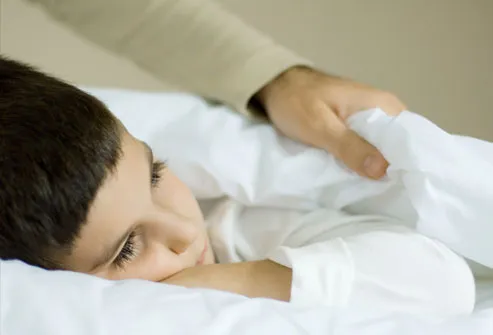
How can i stop my child from wetting the bed. Most experts consider bed-wetting normal until the age of six. This will give room for urine storage in the bladder and also help in keeping track of their peeing pattern at night. Encouragement is crucial as you work to help your child stay dry Mendelson says.
You dont want to make him feel bad about something he cant control. Tell your child that more than 5 million children in the US. Almost half of all children still wet the bed at the age of three.
So its likely that your child knows someone who wets the bed. The before bed bathroom breaks. Watching what your child eats before bed can help combat the issue stock image.
And even if that friend doesnt share their secret there can be something very comforting for your child in thinking. Do you still wet the bed. This step might be useful if your child has a tendency to develop bladder infections.
Do not give your child drinks containing caffeine such as cola tea and coffee this can make them pee more. If it is genetic think about your own childhood- when did you stop wetting the bed. Do not regularly wake or carry your child in the night to use the toilet this will not help in the long term.
Generally bed-wetting before age 7 isnt a concern. Make sure that your child relieves themselves before going to bed. 9 recommendations to help your child stop wetting the bed On a physical level Establish a fixed schedule for fluid intake.
Continue to wet the bed past the age of 6 according to the NKF and most of them outgrow it. The answer is most likely no which means that your child will eventually stop too. Contact the pediatrician if your child.
You can also discuss use of medication to stop bedwetting with your childs doctor. If bed-wetting continues treat the problem with patience and understanding. In this case offer your child plenty of water and fibre-rich foods and talk to your doctor about an over-the-counter laxative.
The underlying issue is usually a bladder thats not yet matured. While your child may be accustomed to drinking a glass of milk or water before bedtime this can play a role in bed-wetting. Also keep in mind that about 15 of children age 5 or older actually stop wetting the bed each year.
Do not punish your child it is not their fault and can make bedwetting worse. Minerals from the saltwater may reduce infection strengthen the immune system and detoxify the body. While you should generally avoid giving young children caffeine anyway its especially true when trying to help stop bedwetting.
When your child is older than age 7 and still wetting the bed you might want to talk with your childs primary care physician or a pediatric nephrologist or urologist. The bladder may also be smaller than normal. Medication works well for some children but they often start wetting the bed once they stop.
Some bed-wetting treatments include. Here at Bright Side we have a list of helpful things to do in this situation to help your child stop wetting the bed. Caffeine stimulates the bladder so do what you can to keep caffeine off the menu before bed at the very least.
Make sure your kid uses the bathroom before laying down try twice if necessary thats called double-voiding try once at the beginning of your night routine and once more at the end. At this age your child may still be developing nighttime bladder control. An expert has revealed the best tips and method to stop kids bed-wetting.
How to stop your child from wetting the bed. Caffeine is a diuretic which means that it can lead to a need to urinate. Delayed bladder maturation-the childs bladder and brain are delayed in communicating with one another so they cannot make it to bathroom in time.
Decrease the number of drinks before bed. Covering the mattress with plastic. A laid-back attitude is key so whatever you do try not to scold or punish your preschooler for wetting the bed.
Encouraging a child to pee before bedtime. Medications may be a good idea to use strategically such as during sleep-overs. Restricting a childs fluid intake before bed.
Lifestyle changes bladder training moisture alarms and sometimes medication may help reduce bed-wetting. He encourages parents who wet the bed as children to tell their kids -- and to tell them at what age they became. Avoid giving your child caffeine.
Have your child take a bath with 500 grams of salt dissolved in the water before bed.
Heres how spatial awareness develops in children. Sand play is a valuable way to develop spatial awareness in young children.
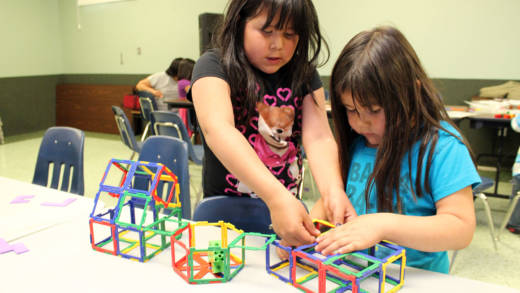 Why Spatial Reasoning Is Crucial For Early Math Education Kqed
Spatial intelligence also known as visual spatial intelligence or spatial reasoning is the capacity to imagine or visualize in ones mind the positions of objects their shapes their spatial relations to one another and the movement they make to form new spatial relations.
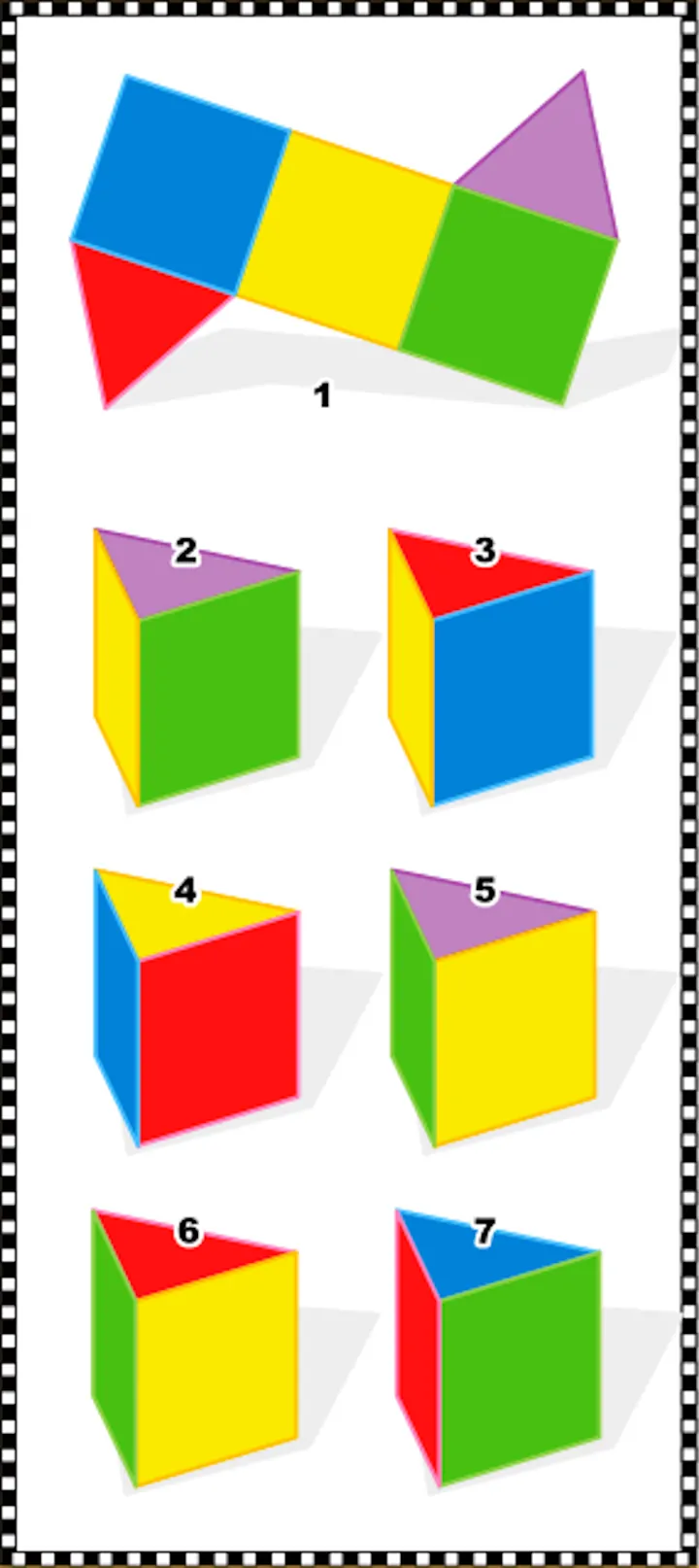
Spatial reasoning child development. Spatial reasoning is the ability to understand and to reason to draw conclusions using cues in the environment that convey information about distance or direction. By exploring both primary and emergent dimensions Spatial Reasoning in the Early Years helps define the concept of spatial reasoning and provides compelling evidence of the need for a clear focus. These skills are especially important in jobs where people need to for example create or read.
Research suggests that spatial thinking skills and geometric reasoning play a critical role in the development of. During middle childhood children become able to discriminate objects that are nearby and far away based on their apparent size. After a single 20-minute session of practice with mental rotation puzzles kids ages 8-6 earned higher scores on a math test compared with control-group peers.
Use spatial talk during activities your child loves. During middle childhood children become able to discriminate objects that are nearby and far away based on their apparent size. Their research has clearly shown that spatial-reasoning skills are crucial for achievement in math and reading and for higher-order thinking.
We use visual-spatial processing to do many kinds of tasks. Part of spatial reasoning includes realizing that when an object is out of view it still exists. Its a crucial skill for children to learn but its also really important for a childs later mathematical development.
Numerous studies also indicate that spatial skills are far more important to academic achievement than many elementary educators previously thought. Block play helps develop orientation mental transformation and spatial awareness. Spatial skills play a critical role in the development of mathematics and reading.
Spatial Reasoning is all about how we understand the way things move in relation to the space around us. Spatial reasoning is one of the most important aspects of a young childs mathematical development. When your child is on the playground describe her spatial location as she is on the go.
Spatial reasoning is the best predictor of whether children will end up in a STEM-related career. This piece of child development is an important milestone in cognition for babies. It is a skill that evolves into stranger danger and a sense of self as baby develops.
By 18 months a toddler has a basic understanding of spatial concepts but spatial awareness begins to develop the day theyre born. To help nurture this form of cognition in children they developed Math for Young Children a curriculum for ages 4 through 8. Spatial skills are crucial for development of problem-solving skills critical reasoning skills and even reading comprehension as suggested by research.
They contribute to essential life skills like parking car using maps packing lunch etc. What is Spatial Intelligence. Spatial reasoning vitally informs our ability to investigate and solve.
If kids have trouble with visual-spatial processing it could affect their performance in reading or math. You can work with your childs teacher or doctor to find strategies to help. You went over the bridge and now you are running under the monkey bars Talk about space in the illustrations when you are reading books.
First they learn that they have a body and their body has different parts building their sensory system. Another experimental study found that brief spatial training can boost a childs performance in mathematics Cheng and Mix 2013. Spatial reasoning is a critical element for developing ways students think about equations.
Monique like many toddlers loved emptying and filling everything. When a child rotates a rectangular prism to fit into the castle she is building at the block centre she is employing spatial reasoning as is the student who uses a diagram of a rectangle to prove that the formula for finding the area of a triangle is ½b. Given the opportunity students spatial reasoning skills can increase when practice is integrated and supported throughout mathematics instruction 24.
Shape stacking and sorting lets very young children explore and develop spatial sense. Tangrams and other puzzles help develop flexibility orientation and mental transformation. Spatial reasoning is the ability to understand and to reason to draw conclusions using cues in the environment that convey information about distance or direction.
Although this isnt a parenting style most experts encourage children raised without limits often praise their upbringing and credit it with. But they dont set limits or are very inconsistent in enforcing boundaries.
 Parenting Styles And Child Behavior Psychology In Action
This paper discusses a study on child-rearing practices in a countryside Philippines specifically Catbalogan City.

Permissive child rearing. Dr Spock on Permissive Child Rearing. They may exhibit more behavioral problems as they dont appreciate authority and rules. Effective child-rearing improves a childs self-confidence and results in responsible and reliable adults.
Permissive parenting is sometimes known as indulgent parenting. Children tend to take advantage of the permissive parent to get away with. They are quick to forgive even where this may not be necessary.
Children reared in permissive families often fail to control their impulses and lack self-reliance Lamborn et al 1991. Permissive parents can be quite attentive and loving but expect and demand very little from their children. Child rearing refers to a.
These types of parents tend to have few rules guidelines and expectations in their child rearing practices. Petigny finds the influence of psychology significant in establishing the Permissive Turn because of the rise of humanism throughout the field. The parenting style used to rear a child will likely impact that childs future success in romantic peer and parenting relationships.
By the time he died it had sold 50 million copies and influenced a generation of parents encouraging them to be less strict and concerned about spoiling their children. Being reluctant to impose limits which is problematic. Child-rearing involves training children by punishing wrong behavior and rewarding good behavior.
It also encompasses promoting childrens physical intellectual emotional and social development. These parents tend to spoil their children by allowing them to do as they like. Petigny asserts that one characteristic of the fifties that helped establish the Permissive Turn was the advances of modern psychology as well as child-rearing.
Dr Benjamin Spock 190398 was a medical doctor whose book Baby and Child Care was first published in 1946. Being nurturing and warm which is good for kids and. Child rearing in Lay mans language is all about understanding how to raise your kids.
The determination of rearing practices and the determination of factors influencing the styles were also tackled. They often have low self-esteem and may report a lot of sadness. These indulgent parents are warm and indulgent but they do not like to say no or disappoint their children.
Parents who exhibit this style make relatively few demands on their children. It involves figuring out whether you should be the liberal conservative permissive authoritative punitive or non-punitive parent to your child- Yes. Children are raised and grow up as social beings and this requires social technology of child care and education particularly early child education.
All these contribute greatly to the future of your kid. Child rearing authoritarian permissive parenting Catbalogan Philippines Good child rearing is certainly an issue that provokes different views. Permissive Child Rearing Practices The permissive parent is low on rules and control but strong on love and affection.
Indulgent parenting is a style of parenting in which parents are very involved with their children but place few demands or controls on them. The permissive parenting style undermines the parent-child relationship. Permissive parents set very few rules and boundaries and they are reluctant to enforce rules.
Because these parents have low expectations for self-control and maturity discipline is a rarity. Permissive parenting sometimes called indulgent parenting is a style of child-rearing that features two key traits. Child rearing authoritarian permissive parenting Catbalogan Philippines.
Diana Baumrind a clinical and developmental psychologist coined the following parenting styles. Indulgent parenting also called permissive non-directive lenient or libertarian is characterized as having few behavioral expectations for the child. Children of permissive parenting tend to have the worst outcomes.
The permissive parenting style is the exact opposite of helicopter parenting Rather than hovering over their childrens every move permissive parents are characteristically lax and provide little to no structure for their childrens day to day school life academic. Permissive parenting is one of the original parenting styles described by Baumrind. Permissive parenting also known as indulgent parenting is a parenting style characterized by high responsiveness and low demandingness.
Authoritative authoritarian and permissiveindulgent Later Maccoby and Martin added the uninvolvedneglectful style. Permissive parents are very responsive to the childs emotional needs. Permissive Parenting Indulgent Low demandingness.
Kids who grow up with permissive parents are more likely to struggle academically. Results were based on. When children cant trust that parents can help them with the full range of their emotions they dont feel connected to the parent.
Children of permissive parents generally experience less academic success Baumrind and Black 1967 in part due to a lack of self-reliance and reduced persistence on tasks Ginsburg and Bronstein 1993. Permissive parents are generally loving and nurturing.
Less clear is how all three constructs are linked to each other over time. Human beings show the highest levels of aggressive behaviour towards their peers.
 Helping Young Children Channel Their Aggression Zero To Three
Although most research on aggression tend to focus on adolescents and adults longitudinal studies using large random samples of new born started to follow the development of physical aggression from infancy approximately 15 years ago.

Aggression in child development. Younger preschoolers often engage in Early Childhood Emotional and Social Development. In contrast instrumental aggression is not motivated by anger or the intention to cause pain. Aggression in children is also influenced by environmental forces outside the home.
Many children grab toys from classmates hit kick or scream themselves blue in the face from time to time. Aggression develops early in life and in most cases demonstrates a gradual decline over the first five years of life. In this study the possible relationship between receptive and expressive language skills and physical and relational aggression of preschool children was studied.
A younger child is still learning all kinds of new skills from using scissors to speaking in complex sentences. There can be many factors that cause this including feelings of oppression in the household because of unemployment lack of financial stability living situations and education. Some young children engage in aggression that is pervasive frequent and severe.
In support of this larger theoretical framework we also hypothesized that exposure to relationally aggressive models within the media may influence the development of relational aggression in young children much like violent media exposure does for physical aggression. The increase in aggressive behavior of children and of the parents will also be considered. Development and aggression levels of preschool children are uncertain for Turkish preschool children.
Self-regulation processes and violent contexts play an important role in predicting adolescents aggressive behavior. Most children learn to inhibit aggressive behaviours by drawing on other skills that emerge during that time. Aggression - Child Development Parenting.
Relational aggression is focused on hurting the social makeup of the person. Examples of relational aggression include social exclusion. Shocking as it may seem aggression is a normal part of a childs development.
Aggression can also be problematic for some children during the early preschool years peaking around age 4. Role of media exposure. Although it is common for outbursts of anger to appear in childhood these children are much more frequent and serious and they can not control their temper in any circumstance or situation.
Instrumental aggression serves as a means to reach a goal. And these environmental effects will vary depending on your childs genes prenatal factors and early life exposure to stress. Whether children hit or bite because they are angry or for reasons you just dont understand aggressive behavior can be a normal part of child development.
On the other hand engagement in indirect forms of aggression also observed in early childhood has been found to increase in frequency as children develop from late childhood and into adolescence Cairns et al. 1 Usually if a child receives consistent negative consequences for aggressionand learns new skills to improve their behavioraggression begins to subside during the preschool years. Common and specific genetic environmental factors Background Few studies are grounded in a developmental framework to study proactive and reactive aggression.
Too often we forget that aggression is a fundamental part of a young childs social development said Paquin. Heterogeneity in the development of proactive and reactive aggression in childhood. Peers teachers neighborhoods media messages ideologies and cultural factors all play a role.
The effects of stress socioeconomic status and cultural background on parenting styles will be examined. What causes aggressive behavior in a child early childhood development of aggression in children effects of aggression in the life of a child how to control an aggressive child. Hostile aggression is intentional with the purpose to inflict pain.
Whether its a child or an adult certain socioeconomic circumstances can trigger stressors that might lead to behavior thats aggressive. The child aggression is one of the disorders that cause more problems at this stage of growth and affects both parents teachers and the immediate environment of the child. Hostile aggression is often motivated by anger.
This usually is seen in older kids like middle schoolers.